Never the Star, Always Ready: Five Understudies Who Stepped Up and Made History

The Hidden Power of Being Second
There's a version of success that gets celebrated constantly — the prodigy, the first-round pick, the person born for the moment. But there's another version that almost nobody talks about: the one who prepares for a moment that may never come, who hones their skills in someone else's shadow, and who — when the door finally swings open — is somehow more ready than anyone expected.
American history is full of these people. They're not footnotes. They're the story.
1. Harry Truman: The Man Nobody Wanted Who Ended the War
When Franklin Roosevelt's advisers were selecting a running mate for the 1944 election, Harry Truman was essentially a consolation prize. The party couldn't agree on their preferred candidate, and Truman — a Missouri senator with a decent reputation but zero national star power — was the compromise nobody got excited about.
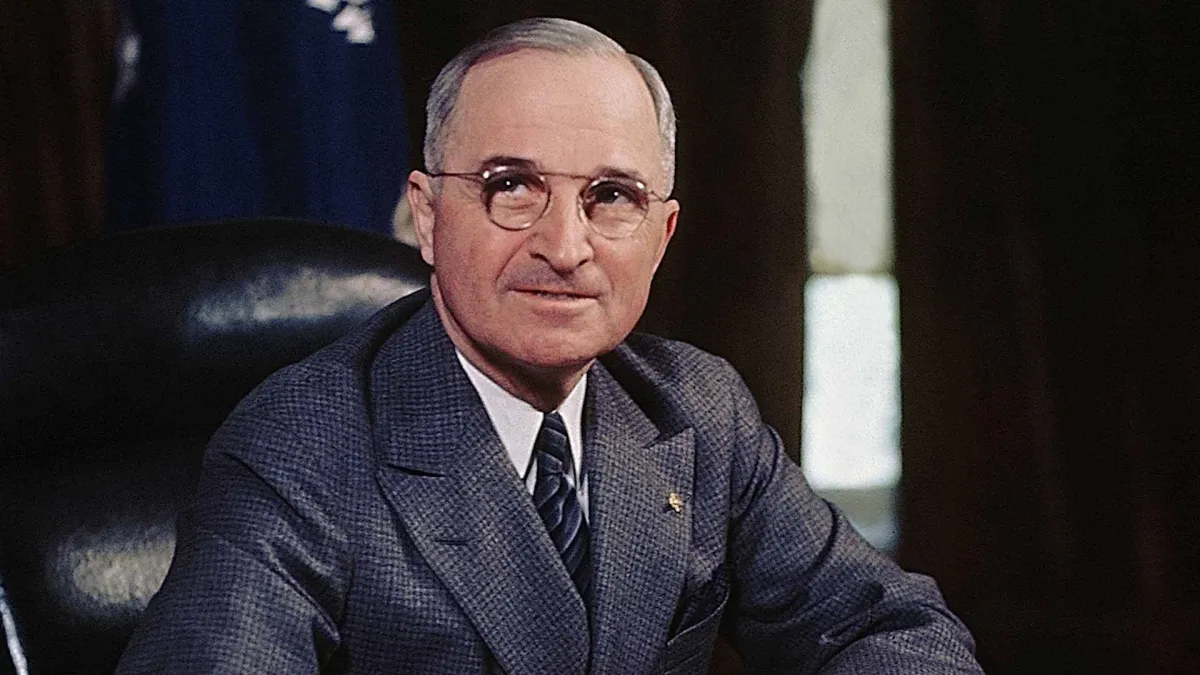 Photo: Harry Truman, via res.cloudinary.com
Roosevelt barely knew him. The two had lunch together exactly twice before FDR died in April 1945, just eighty-two days into his fourth term. Truman hadn't been briefed on the Manhattan Project. He hadn't been included in major strategic decisions about the war. He was, by almost every measure, the least prepared man for the most consequential job on earth.
And yet.
Truman made the decision to drop the atomic bomb, oversaw the end of World War II, launched the Marshall Plan to rebuild Europe, desegregated the U.S. military by executive order, and stood firm against Soviet expansion during the opening years of the Cold War. He is now consistently ranked among America's greatest presidents by historians.
He wasn't the plan. He was what happened when the plan fell apart.
2. Vivien Thomas: The Lab Technician Who Taught Surgeons How to Save Children's Hearts
Vivien Thomas was hired as a janitor at Vanderbilt University in 1930. He was Black, he had no college degree, and he was living through the Depression in the Jim Crow South. His employer, a surgeon named Alfred Blalock, quickly recognized that Thomas had an extraordinary gift for precision laboratory work and began training him as a research assistant.
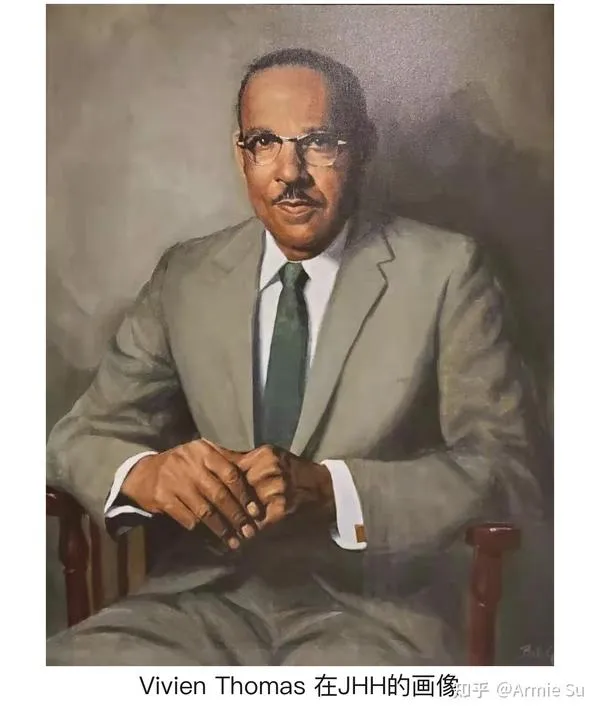 Photo: Vivien Thomas, via pic4.zhimg.com
For years, Thomas worked in Blalock's lab developing surgical techniques — doing work that would have earned most people a medical degree — while being paid on the janitor's pay scale and barred from most of the university's facilities.
When Blalock moved to Johns Hopkins and began working on a procedure to save babies born with a heart defect called "blue baby syndrome," it was Thomas who perfected the surgical technique in the lab. When Blalock performed the first successful procedure on a human patient in 1944, Thomas stood on a step stool behind him, quietly guiding his hands through the operation.
The surgery made headlines. Blalock's name was attached to it. Thomas's wasn't — not for decades. He eventually received an honorary doctorate from Johns Hopkins in 1976, forty-six years after he first walked through the door. His portrait now hangs in the university's medical school, beside Blalock's.
He was never supposed to be in that operating room. He built himself into the only person who could be.
3. Scottie Pippen: The Small-Town Kid Who Made Greatness Possible
Scottie Pippen grew up in Hamburg, Arkansas, a town so small it barely registered on the state map. He was the youngest of twelve children, and he wasn't even a starter in high school — he managed equipment for the basketball team before eventually making the roster. He walked on at a tiny college in Arkansas and was so unknown coming out that the Chicago Bulls had to orchestrate a draft-day trade to get him in 1987.
For the first few years of his NBA career, he was Michael Jordan's supporting cast. The sidekick. The guy who made Jordan's brilliance possible. Sports media rarely let him forget it.
But in the summer of 1994, Jordan retired for the first time. Suddenly, Pippen was the Chicago Bulls. No Jordan. No safety net. Just Scottie.
He led the Bulls to 55 wins that season, nearly dragging them to the Eastern Conference Finals almost entirely on his own. He was named to the All-NBA first team. He proved, without any ambiguity, that he was not merely a complement to greatness — he was great.
When Jordan returned, Pippen's role changed again, and together they won three more championships. But 1994 was the year the understudy showed his face, and nobody who watched it forgot.
4. Grace Hopper: The Naval Reserve Officer Who Invented the Way Computers Talk
Grace Hopper was 37 years old and a math professor at Vassar when she joined the Naval Reserve in 1943. She was assigned to work on the Mark I computer at Harvard — a machine the size of a room that could barely be called a computer by modern standards. She was not the lead. She was not the visionary in charge. She was handed a manual and told to figure it out.
Figure it out she did.
Hopper became one of the first programmers of the Mark I and went on to develop the concept of the compiler — software that translates human-readable instructions into machine code. Before Hopper, programming meant writing in raw binary. After Hopper, it meant something approaching English. She essentially invented the idea that computers should speak to people in a language people could understand.
She spent much of her career being underestimated, overlooked for promotions, and told her ideas were impractical. She kept going. By the time the U.S. Navy retired her — involuntarily, twice, before she finally stepped down at 79 — she held the rank of Rear Admiral and had fundamentally changed how every computer on earth operates.
She wasn't the face of the early computing revolution. She was its foundation.
5. Ginger Rogers: The Dancer Who Made the Star Look Good — Backwards
The famous line about Ginger Rogers is that she did everything Fred Astaire did, but backwards and in heels. It's funny because it's true, and it captures something real about the invisible labor of the person who makes a performance look effortless.
Rogers came up through vaudeville and bit parts, scratching her way through Depression-era Hollywood before she was paired with Astaire in Flying Down to Rio in 1933. The pairing was almost accidental — she wasn't the studio's first choice. But the chemistry was undeniable, and for the next decade, she was the other half of Hollywood's most iconic dancing duo.
What often gets lost is that Rogers was the more versatile performer. While Astaire was celebrated as a pure dance genius, Rogers could act, do comedy, and carry a dramatic scene. In 1940, she won the Academy Award for Best Actress for Kitty Foyle — a non-musical drama — proving that she was never just the woman he danced with.
She had spent years making someone else look brilliant. Turns out, she was brilliant herself.
What the Understudies Knew
None of these five people were given their moments. They built the capacity for those moments across years of quiet, often unrecognized work — and when the opening came, they were ready in a way nobody had fully anticipated.
The understudy doesn't get the applause during rehearsal. But they're the ones learning every line.