The Architect Who Cracked a Code That Stumped Every Scholar on Earth
The Script Nobody Could Read
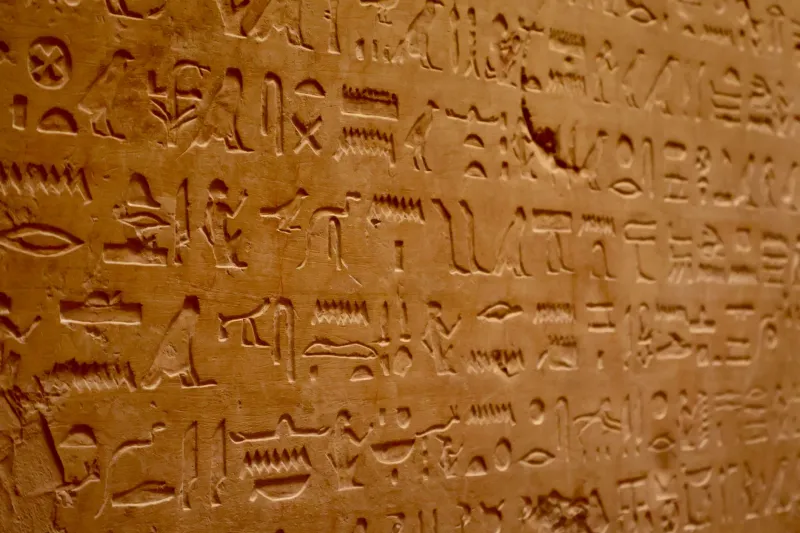
For half a century, Linear B sat on the desks of the world's most distinguished classical scholars like an unanswered dare. The ancient writing system — scratched onto clay tablets unearthed from the ruins of Knossos, Crete, and later mainland Greece — refused to yield its secrets. Professors at Oxford and Cambridge devoted careers to it. The great Arthur Evans, who excavated Knossos in the early 1900s, spent decades convinced he understood its origins and still couldn't read a single word. By the 1950s, the academic consensus was quietly drifting toward surrender. Maybe Linear B was simply too old, too strange, too thoroughly dead to ever speak again.
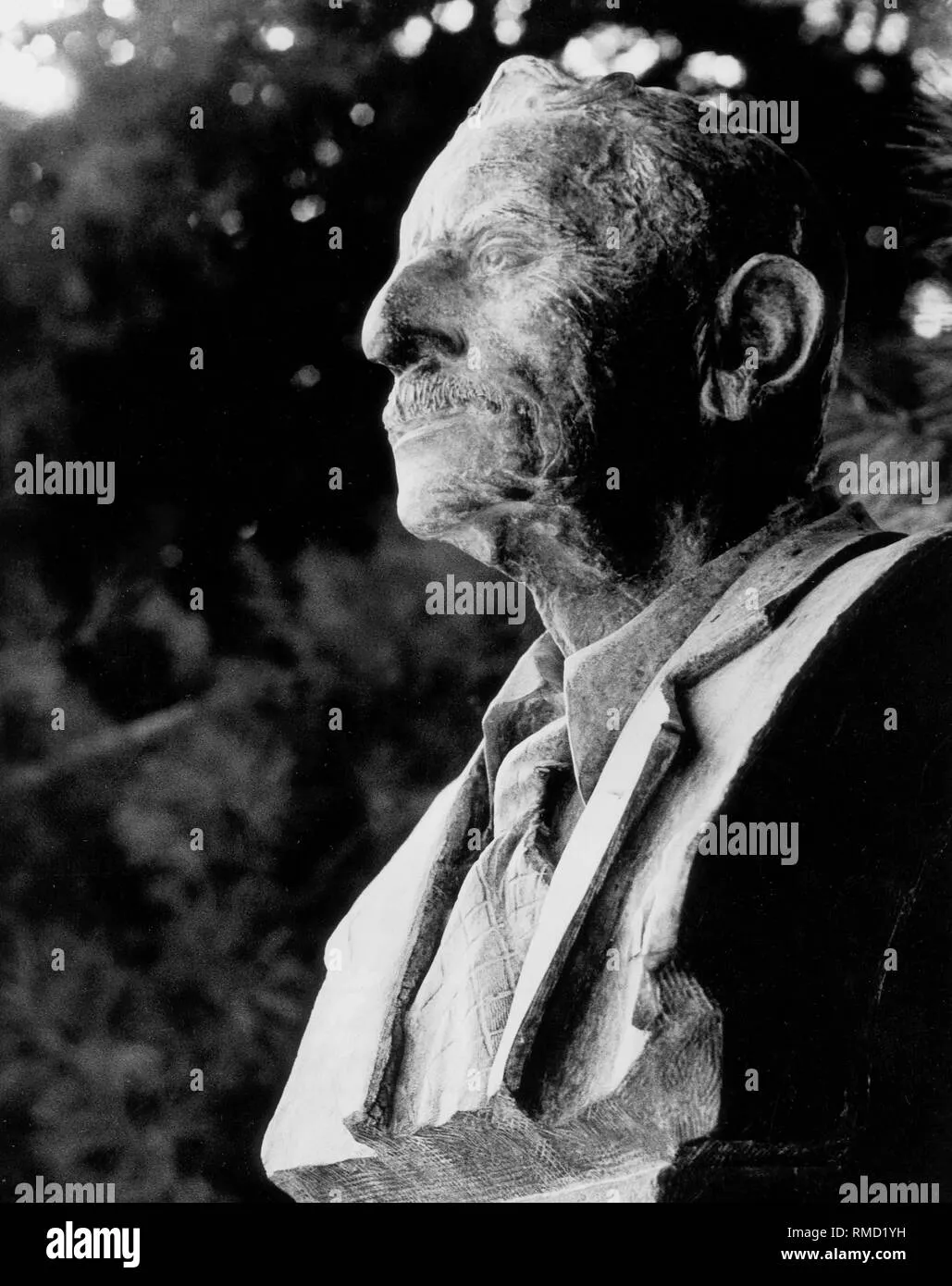 Photo: Arthur Evans, via c8.alamy.com
Michael Ventris was not a professor. He was not a classicist. He was a London architect who spent his days designing buildings and his evenings obsessing over a dead language nobody could crack. And in 1952, at the age of thirty, he did what the experts couldn't.
 Photo: Michael Ventris, via alchetron.com
He read it.
A Boy Possessed by a Puzzle
The story starts, as so many great ones do, with a child who didn't know the rules yet. Ventris was fourteen years old when he attended a lecture by Arthur Evans himself at the Burlington Fine Arts Club in London. Evans showed slides of the unread tablets. Most of the audience saw an archaeological curiosity. Young Michael saw the most interesting problem he'd ever encountered in his short life.
He spent the next sixteen years thinking about it.
Ventris grew up multilingual — he spoke German, French, Polish, and English fluently by his teens — but he never pursued a formal degree in classics or linguistics. He trained as an architect, served as a navigator in World War II, and built a quiet professional life. All the while, Linear B lived in a corner of his mind like a tenant who never quite paid rent but was too fascinating to evict.
He corresponded with scholars. He read everything available. He ran his own analyses during lunch breaks and late nights, keeping meticulous notebooks that looked nothing like academic papers and everything like an engineer's problem-solving diagrams. He treated the script the way he might treat a structural puzzle in a building — systematically, visually, without the weight of inherited assumptions.
That last part turned out to matter enormously.
The Assumption That Trapped the Experts
Here's what the scholars believed, almost universally: Linear B was not related to Greek. The script predated classical Greek civilization by centuries, and the prevailing theory — championed by Evans and reinforced by decades of institutional repetition — held that it represented an entirely separate, likely Minoan language with no connection to anything scholars already knew.
Ventris started from the same assumption. For years, he chased dead ends under that framework. But because he was an outsider, he had no professional reputation riding on any particular theory. He had no dissertation to defend, no departmental consensus to uphold. When the data stopped fitting the model, he was free to throw the model out.
In the spring of 1952, working through statistical frequency patterns and cross-referencing sign groupings with known place names from the Greek world, Ventris made a leap that would have felt professionally suicidal to a credentialed linguist: he tested the hypothesis that Linear B was, in fact, an early form of Greek.
It fit. Almost immediately, it fit.
Words assembled themselves. Familiar roots emerged. A tablet that had been meaningless noise for fifty years began listing, in recognizable terms, commodities and livestock and the names of craftsmen. Linear B was Greek — Mycenaean Greek, older than Homer, older than anything the classical world had previously documented. The script wasn't a mystery from an alien civilization. It was the earliest written record of a language that would eventually produce Plato, Sophocles, and the New Testament.
The experts had been sitting on a goldmine and couldn't see it because they were certain it was coal.
What Outsiders See That Insiders Miss
When Ventris announced his findings in a BBC radio broadcast in July 1952, the reaction from the academic world was a mixture of astonishment and, in some quarters, defensive skepticism. Here was an architect — an architect — claiming to have solved a problem that had defeated professional linguists for generations. Some scholars pushed back hard. Others, to their credit, tested his framework against new tablets arriving from excavations and found it held up perfectly.
Within a few years, the consensus had shifted completely. Ventris collaborated with Cambridge classicist John Chadwick, who provided the scholarly scaffolding Ventris had never formally built for himself, and together they published Documents in Mycenaean Greek in 1956. It remains a foundational text in the field.
Ventris never got to see his full legacy take shape. He died in a car accident in September 1956, just weeks after the book was published. He was thirty-four years old.
The Advantage of Not Belonging
What Ventris left behind wasn't just a deciphered script. He rewrote the timeline of Greek civilization, pushing its written history back by centuries and revealing a sophisticated Bronze Age culture — the Mycenaeans — that no one had fully understood. He proved that the world Homer described in the Iliad and the Odyssey wasn't pure legend but a distorted memory of a real, literate civilization.
He also left behind something harder to quantify: a demonstration of what becomes possible when someone approaches an old problem without the mental furniture that expertise sometimes installs permanently.
The scholars who spent their careers on Linear B weren't less intelligent than Ventris. They were, if anything, more knowledgeable. But knowledge can calcify into assumption. The map you've been handed becomes the territory you refuse to question. Ventris had no map. He drew his own.
There's a version of this story where Michael Ventris goes to university, earns a classics degree, joins a department, and spends twenty years reaching the same conclusion through the proper channels. Maybe he gets there eventually. Maybe the institutional gravity pulls him toward the consensus and he never does.
Instead, he was an architect who worked on the puzzle in his spare time. And that made all the difference.