Wrong Job, Right Discovery: Five Scientists Who Changed the World While Nobody Was Looking

Photo: Frankincense Diala, CC0, via Wikimedia Commons
When the Lab Goes Off-Script
Science, in the popular imagination, is orderly. A researcher identifies a question, designs a rigorous experiment, follows the data, and emerges — after suitable years of effort — with a discovery. Grants are written. Papers are published. The world advances.
Reality, it turns out, is considerably messier and a lot more interesting. Some of the most consequential moments in scientific history happened when someone was supposed to be doing something completely different and got distracted by something they couldn't ignore. The accidental observer. The wrong experiment that led to the right answer. The technician who looked up from their assigned task at exactly the wrong — or exactly the right — moment.
Here are five of them.
1. Alexander Fleming — The Man Who Forgot to Clean Up
In the summer of 1928, Alexander Fleming left his London laboratory for a vacation without properly cleaning up a set of petri dishes he'd been using to culture Staphylococcus bacteria. He was a bacteriologist at St. Mary's Hospital, assigned to the thoroughly unglamorous work of studying infection-causing microbes. Nobody asked him to revolutionize medicine. Nobody expected him to.
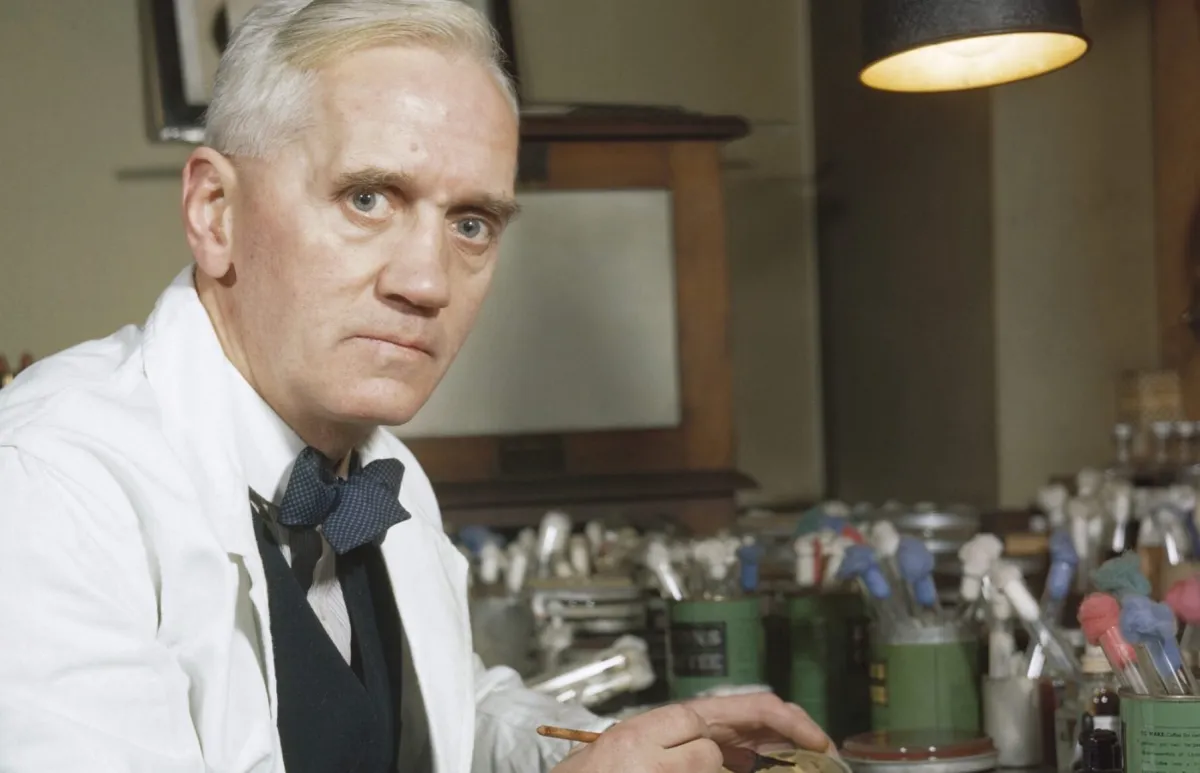 Photo: Alexander Fleming, via www.sciencehistory.org
When he returned, he found that one of his contaminated dishes had developed a patch of mold — Penicillium notatum — and that the bacteria surrounding it were dead. The mold was killing them. Fleming recognized immediately that he was looking at something unusual, published his findings, and then watched for more than a decade as the wider scientific community largely ignored him.
It took Howard Florey and Ernst Chain — working in Oxford during World War II — to transform Fleming's abandoned observation into a workable drug. But the discovery itself? It happened because a bacteriologist went on vacation and left dirty dishes in the sink. Penicillin, which has saved an estimated 200 million lives, began as a housekeeping failure.
2. Arno Penzias and Robert Wilson — The Noise That Turned Out to Be the Big Bang
In 1964, two radio astronomers at Bell Telephone Laboratories in New Jersey were assigned a practical task: calibrate a large microwave antenna originally built to communicate with the Echo satellite. Arno Penzias and Robert Wilson were not cosmologists. They were not trying to confirm or deny any theory about the origins of the universe. They were, essentially, troubleshooting telecommunications equipment.
The problem was a persistent, irritating background hiss that appeared in the antenna's signal no matter which direction they pointed it. They checked the equipment. They checked their calculations. They even checked the antenna itself for pigeon droppings — which they cleaned out, in what may be the most consequential act of bird-related maintenance in scientific history. The hiss remained.
What they were actually hearing was the cosmic microwave background radiation — the faint thermal echo of the Big Bang itself, still reverberating through the universe some 13.8 billion years after the fact. A group of Princeton physicists had been theoretically predicting this exact radiation for years. Penzias and Wilson had stumbled onto the experimental confirmation of the universe's origin story while trying to fix what they thought was a broken antenna.
They won the Nobel Prize in Physics in 1978. The pigeons were not acknowledged.
3. Wilhelm Röntgen — The Glow That Shouldn't Have Been There
On the evening of November 8, 1895, German physicist Wilhelm Röntgen was working alone in his laboratory at the University of Würzburg, experimenting with cathode ray tubes — a fairly standard pursuit for physicists of the era. His specific assignment that evening was unremarkable by any measure. What was not unremarkable was the faint glow he noticed on a fluorescent screen sitting across the room, well beyond the range where cathode rays could possibly have traveled.
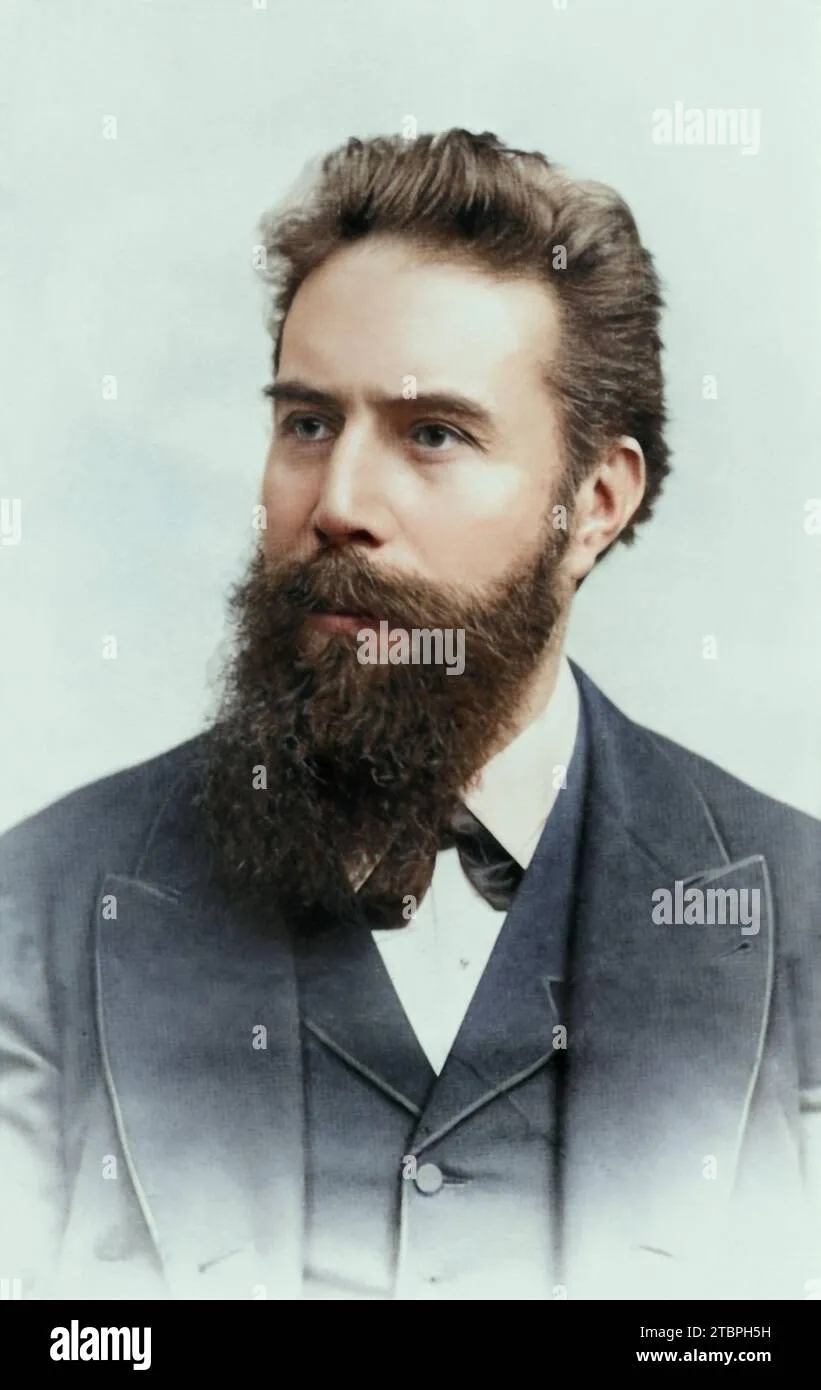 Photo: Wilhelm Röntgen, via c8.alamy.com
Something was passing through the cardboard shielding around his tube and illuminating the screen. Something he hadn't produced intentionally and couldn't immediately explain. Röntgen spent the next several weeks in near-total secrecy, eating and sleeping in his lab, trying to characterize what he'd found. He called it X-rays — the mathematical symbol for the unknown — because he genuinely didn't know what he was dealing with.
When he finally published in December 1895, the response was immediate and electric. Within a year, X-ray machines were being used in hospitals. Within a generation, they had become one of the foundational tools of modern medicine. Röntgen won the very first Nobel Prize in Physics in 1901. He had been running a routine experiment when the universe handed him something extraordinary.
4. Roy Plunkett — The Frozen Cylinder That Wasn't Supposed to Be Empty
In April 1938, a young DuPont chemist named Roy Plunkett was working on developing new refrigerants — a practical, applied chemistry task with clear commercial goals. He was experimenting with tetrafluoroethylene gas, storing it in small cylinders. One morning, a cylinder that should have contained gas registered as empty on the valve. But it was too heavy to be empty.
Plunkett cut the cylinder open instead of moving on. Inside, he found a white, waxy solid coating the interior walls. The gas had polymerized spontaneously overnight into a substance nobody had intentionally created. It was extraordinarily slippery, chemically inert, and resistant to heat in ways that existing materials weren't.
DuPont patented it as Teflon. Today it coats cookware, lines industrial pipelines, lubricates spacecraft components, and shows up in Gore-Tex fabric. None of it was planned. Plunkett was looking for a better refrigerant and found one of the most versatile synthetic materials in human history because he was curious about why a cylinder weighed more than it should.
5. Percy Spencer — The Melted Chocolate Bar That Fed the World Differently
In 1945, Percy Spencer was a self-taught engineer at Raytheon — a man who had never finished formal schooling but had become one of the company's most valuable radar technicians. He was working near a magnetron, the device that generates microwave energy used in radar systems, when he noticed something in his shirt pocket: a peanut cluster candy bar had melted.
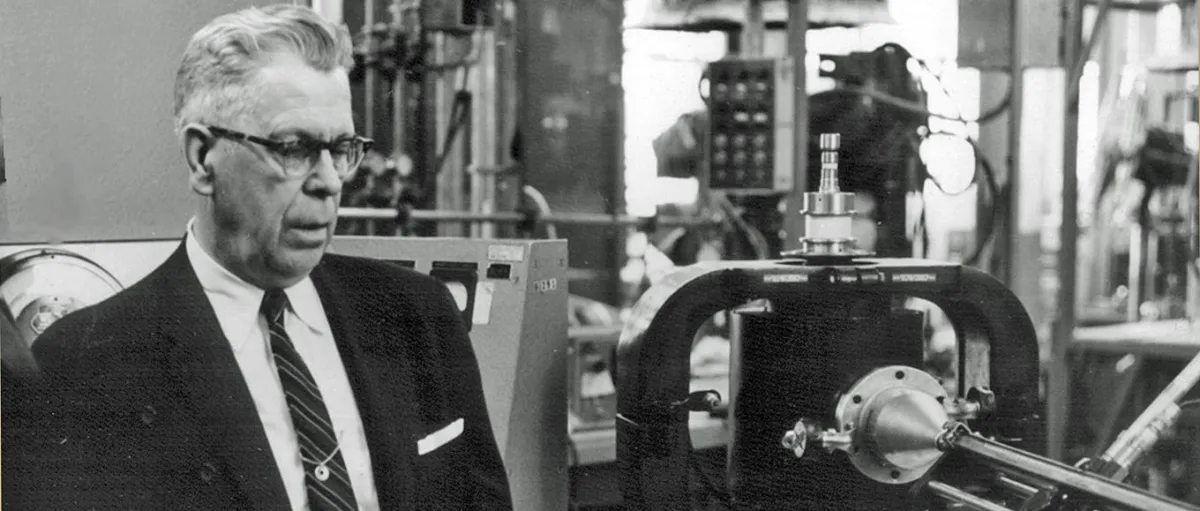 Photo: Percy Spencer, via www.massmoments.org
Spencer had not been assigned to explore food applications of microwave energy. He had not been tasked with anything remotely culinary. But instead of writing off the melted candy as a minor inconvenience, he started experimenting. He tried popcorn kernels. He tried an egg — which, famously, exploded. Within months, Raytheon had filed a patent for a microwave cooking device.
The first commercial microwave oven, released in 1947, stood nearly six feet tall and cost about $5,000. Today, roughly 90 percent of American households own one. Spencer, who grew up in poverty in rural Maine and was orphaned young, changed how an entire civilization heats its food — while officially being paid to work on military radar.
The Pattern Behind the Accidents
What connects these five stories isn't luck, exactly — or not luck alone. Each of these people could have explained away what they saw. Fleming could have tossed the contaminated dish. Penzias and Wilson could have blamed the hiss on equipment error and moved on. Röntgen could have logged an anomaly and gone home. Plunkett could have marked the cylinder defective. Spencer could have bought a new candy bar.
Instead, each of them stopped. Each of them asked why. That instinct — to treat the unexpected as an invitation rather than an interruption — isn't something a job description can teach. It's something you either bring to the lab or you don't.
The official assignment was never the point. The curiosity was.