Hired to Do the Dull Work, She Mapped the Sun Instead
The Job Nobody Wanted
In the late nineteenth century, the Royal Observatory at Greenwich, England, had a problem that was also, in a roundabout way, an opportunity. The observatory was drowning in data. Photographic plates of the sun were piling up. Numbers needed processing. Calculations needed checking. It was tedious, painstaking work — the kind that senior astronomers considered beneath them — and the observatory needed people willing to do it cheaply and carefully.
 Photo: Royal Observatory at Greenwich, via www.astronomy.com
The solution, arrived at with a kind of accidental progressivism, was to hire women. Not to do astronomy, the thinking went. To do arithmetic. Women computers, they were called — human calculating machines, paid a fraction of what male staff earned, expected to process data without troubling anyone with original thoughts. It was drudgery dressed up as opportunity.
Annie Scott Dill Maunder took the job in 1891. She was twenty-eight years old, Irish-born, the daughter of a Presbyterian minister from County Londonderry, and almost certainly the most academically qualified person in the room. She had studied mathematics at Girton College, Cambridge — one of the only colleges that admitted women at the time — and scored at the top of her class. Cambridge, being Cambridge, declined to actually award her a degree. Women weren't eligible. She received a certificate instead.
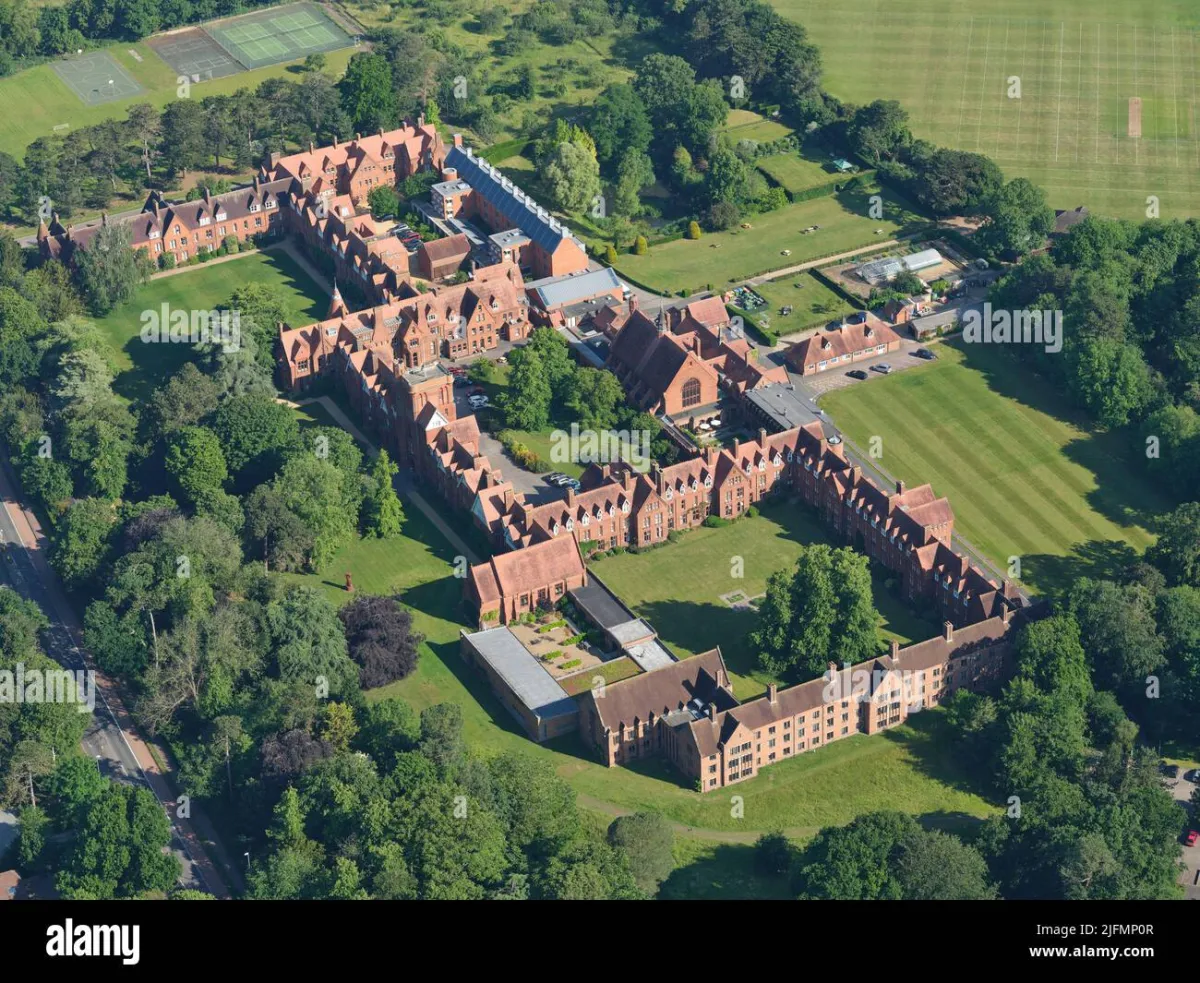 Photo: Girton College, Cambridge, via c8.alamy.com
So she went to Greenwich and started counting sunspots.
More Than a Calculator
The Royal Observatory did not intend to produce a pioneering solar researcher. It intended to produce accurate tables. Annie Maunder had different ideas, though she was careful about how she expressed them.
Sunspot observation in the 1890s was less glamorous than it sounds. Astronomers had been tracking dark patches on the sun's surface for centuries, and while there was broad awareness that sunspot activity seemed to follow roughly eleven-year cycles, the underlying patterns were poorly understood. Maunder threw herself into the data with a thoroughness that went well beyond her job description. She wasn't just recording numbers — she was looking for meaning in them.
Working alongside Edward Walter Maunder — a senior astronomer she would later marry in 1895 — she began examining historical sunspot records going back to the seventeenth century. What she found was extraordinary: a period running roughly from 1645 to 1715 during which sunspot activity had virtually disappeared. Solar observers of the era had noted the absence as a curiosity. Annie recognized it as a phenomenon worth naming and explaining.
The period is now known as the Maunder Minimum. It correlates strongly with the Little Ice Age, a prolonged cold spell that affected European climate, agriculture, and history in ways researchers are still working to fully understand. The connection between solar activity and Earth's climate — one of the most actively studied questions in modern atmospheric science — runs directly through work that Annie Maunder did on her lunch breaks from computing other people's data.
The Camera She Carried Herself
If the Maunder Minimum were Annie's only contribution, it would be enough to secure her a prominent place in the history of astronomy. But she kept going.
In 1898, Annie joined a solar eclipse expedition to India — one of several such trips she and her husband undertook to photograph the sun's corona during moments of total darkness. The expeditions were a logistical challenge that required hauling photographic equipment across difficult terrain, coordinating precise timing, and capturing images in the few seconds that totality allowed. Annie wasn't invited as a spectator. She was a working member of the team, handling her own camera.
During the 1898 eclipse, she captured a photograph showing a coronal streamer extending across an extraordinary distance from the sun's surface — the longest solar extension ever photographed up to that point. The image required a wide-angle lens she had specifically adapted for the purpose. It was technically innovative work produced by someone who had taught herself the relevant photographic chemistry because nobody at the observatory was going to teach it to her.
The photograph was published. The credit, in the way of the era, was complicated. Edward Maunder's name appeared more prominently in official records. Annie's contribution was noted in footnotes, if at all.
What the Institution Missed
There's a particular kind of institutional blindness that comes from deciding in advance what someone is capable of. The Royal Observatory hired Annie Maunder to process numbers, and in doing so handed her access to one of the richest solar datasets in existence. It never occurred to the people running the place that the woman doing the arithmetic might also be the person best positioned to interpret it.
Annie was eventually let go from her computing position in 1895 — the rules required women to leave upon marriage, and she had married Walter that year. She continued her research anyway, unpaid, collaborating with her husband and publishing under both their names. In 1916, she became one of the first women admitted as a Fellow of the Royal Astronomical Society, an institution that had previously barred women from membership for its entire 96-year history.
She co-authored The Heavens and Their Story with Walter in 1908, a popular astronomy book aimed at general readers — a kind of science communication effort that was ahead of its time. She wrote, observed, calculated, and photographed for decades, producing a body of work that straddled the line between meticulous data collection and genuine theoretical insight.
Still Cited, Still Underread
Annie Maunder died in 1947. Her work on the Maunder Minimum has been cited in climate science literature, solar physics journals, and historical climatology research throughout the twentieth and twenty-first centuries. The period she identified and characterized is now standard curriculum in any serious discussion of solar variability and its relationship to Earth's climate — a topic that has only grown more urgent as the world grapples with understanding what drives temperature change across centuries.
She is not a household name. She doesn't have the biographical footprint of contemporaries who did less careful work with considerably more institutional support. Part of that is the era — women's contributions to Victorian and Edwardian science were systematically underrecorded. Part of it is that the work she did was, by design, invisible. Computing was supposed to be invisible. The people who assigned her to it intended it that way.
What they didn't account for was the possibility that the person doing the invisible work might also be the one who could see what everyone else was missing.
Annie Maunder looked up from her calculations, looked at the sun, and saw a pattern that changed how we understand the relationship between our star and our climate. She did it without a degree, without a salary for most of her career, and without the institutional standing that would have made her findings easier to dismiss.
The data was always there. She just refused to stop at the numbers.