No Experience Required: Five Times an Amateur Walked In and Solved What the Experts Couldn't

When Not Knowing the Rules Turns Out to Be the Whole Point
There's a certain kind of expert confidence that can quietly become a liability. Spend enough years inside a field and you absorb not just its knowledge but its assumptions — the things everyone knows, the approaches nobody questions, the solutions that have already been ruled out. Sometimes what a problem actually needs is someone who hasn't read that memo.
American history is quietly full of these moments: the untrained outsider who wandered into a crisis and found the exit that the specialists had somehow missed. Most of them never made it into textbooks. Here are five who deserve a longer look.
1. The Farm Boy Who Figured Out What Was Killing the Cattle
In the late 1800s, livestock across parts of the American West were dying from a mysterious condition that baffled veterinarians and agricultural scientists alike. The animals developed strange, grotesque symptoms — swollen joints, brittle bones, a kind of slow deterioration that nobody could pin to a single cause.
It was a rancher's teenage son named James Piper who noticed something the professionals had overlooked: the sick animals were all grazing in areas where a particular plant grew in abundance. He didn't know the plant's Latin name. He didn't have a laboratory. What he had was an eye trained by years of watching animals move across specific terrain, and an instinct that the vegetation pattern mattered.
His observation — that selenium-rich soils were producing plants toxic to livestock — pointed researchers toward what eventually became a foundational understanding of trace mineral toxicity in agriculture. The scientists got the credit. Piper got a footnote, if that.
2. The Steamboat Clerk Who Redesigned the River
Mark Twain famously wrote about life on the Mississippi, but less celebrated is the story of a riverboat clerk named Henry Shreve who, in the early 19th century, single-handedly reimagined how steamboats were built — and in doing so, opened up the American interior to commerce in ways engineers of the era hadn't managed.
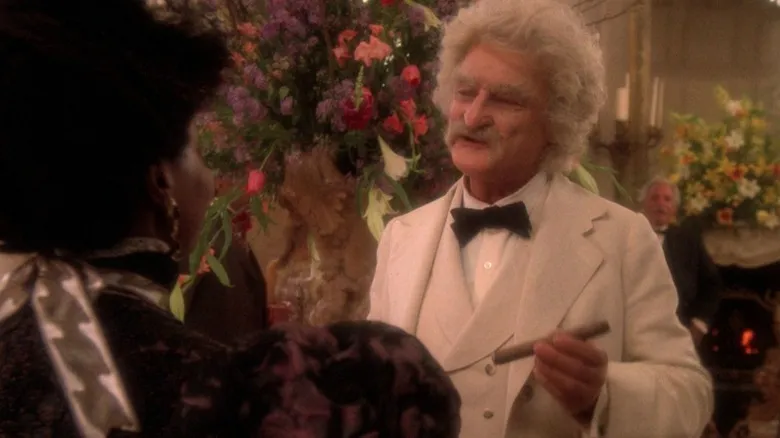 Photo: Mark Twain, via www.slashfilm.com
Shreve had no formal engineering training. What he had was an intimate, practical knowledge of the river — its shallows, its snags, its seasonal moods. When he redesigned the steamboat hull to sit higher in the water and moved the engines above deck rather than below, professional engineers were skeptical. The design looked unstable. It looked wrong.
It worked. His flat-bottomed, shallow-draft design became the template for Mississippi River steamboats and allowed navigation of rivers that had previously been impassable to commercial vessels. The city of Shreveport, Louisiana, is named after him — which is more than most credentialed engineers can say.
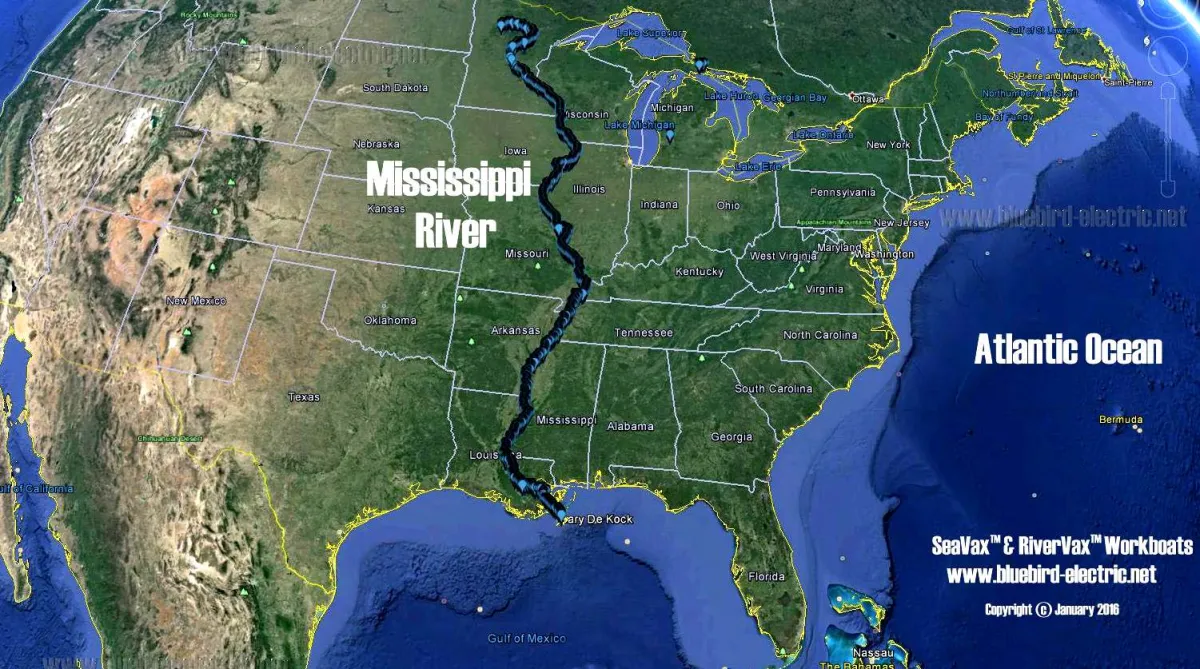 Photo: Mississippi River, via www.bluebird-electric.net
 Photo: Shreveport, Louisiana, via c8.alamy.com
3. The Schoolteacher Who Cracked a Medical Mystery in Her Own Classroom
In the 1950s, a schoolteacher in rural Georgia named Lyda Adams noticed that several of her students were showing identical symptoms — fatigue, pale skin, slow development — and that they all came from the same cluster of families near a particular creek. Doctors in the area had been treating the children individually, for various diagnoses, without connecting the cases.
Adams, who had no medical training whatsoever, started keeping her own records. She drew a map. She tracked which families were affected, where they lived, what their water sources were, and when the symptoms appeared. Her amateur epidemiological map eventually reached a county health official who recognized what she'd built: evidence of a localized hookworm outbreak tied to a specific contaminated water source.
Public health officials later credited her systematic observation — the kind of careful, patient record-keeping that good science requires — with triggering an intervention that treated hundreds of children. She had done, by instinct, exactly what trained epidemiologists are taught to do.
4. The Watchmaker Who Fixed the Problem NASA's Engineers Couldn't
During the early years of the American space program, precision timekeeping was a constant engineering headache. The extreme conditions of space — temperature swings, vibration, radiation — played havoc with the mechanical watches and timing instruments that missions depended on. NASA's engineering teams worked on the problem for months.
A watchmaker from Cincinnati named Raymond Bates, who had been repairing and modifying timepieces for forty years in a small shop, read about the problem in a trade publication and sent an unsolicited letter to NASA describing a modification he'd developed for deep-sea diving watches — a different extreme environment with some overlapping challenges. His solution involved a particular approach to lubricant-free movement that his formal engineering counterparts hadn't considered.
NASA engineers initially filed the letter away. Then, months later, someone pulled it back out. Elements of Bates's approach were incorporated into the timing systems used on later missions. He never received a contract or a formal acknowledgment. He kept fixing watches in Cincinnati.
5. The Grocery Store Manager Who Accidentally Invented Modern Inventory Science
In the early 1950s, a grocery store manager in Ohio named Sylvan Goldman was annoyed. His customers kept stopping shopping when their arms got tired of carrying baskets. He wanted them to keep buying things. He had no background in engineering, ergonomics, or retail design theory. He had a janitor named Fred Young, some folding chairs, and a problem he wanted to solve.
Together, Goldman and Young built the first shopping cart out of folding chairs fitted with wheels and a basket. It looked ridiculous. Customers initially refused to use it — men thought it looked weak, women thought it looked like a baby carriage. Goldman hired models to push the carts around the store to normalize the behavior.
Within a decade, the shopping cart had transformed retail economics across the country. It increased average purchase size, changed store layout design, and eventually gave rise to an entire discipline of retail consumer behavior research. Goldman, who had no credentials in any of those fields, had accidentally founded all of them.
The Pattern Behind the Exceptions
These five stories don't share a field, an era, or an outcome. What they share is a posture: people who looked at a problem without knowing they weren't supposed to be able to solve it, and solved it anyway. The experts they upstaged weren't incompetent. They were, in most cases, simply too deep inside the problem to see its edges.
The amateur's advantage isn't ignorance. It's the specific kind of freedom that comes from having no professional reputation to protect and no prior investment in any particular answer. Sometimes that's exactly what a stuck problem needs.