The Amateur Who Unlocked 3,000 Years of Silence
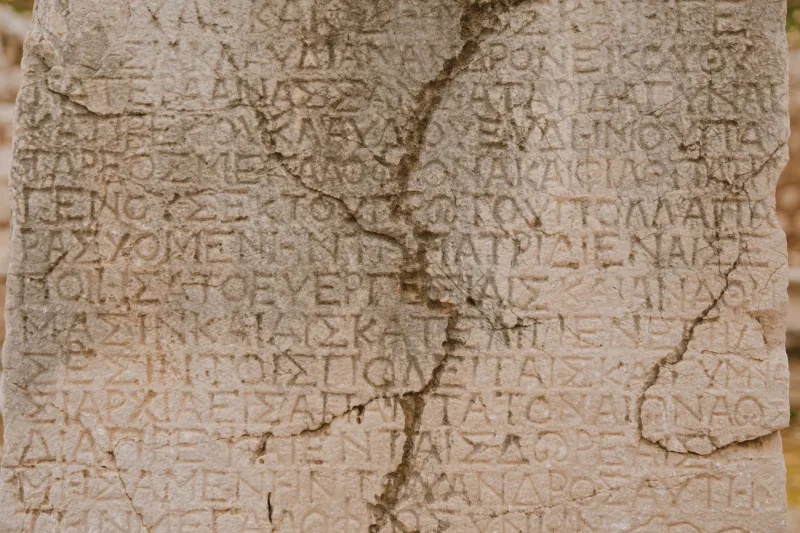
The Script Nobody Could Read
For nearly half a century, a small clay tablet sat at the center of one of archaeology's most frustrating arguments. The writing on it — neat rows of angular symbols pressed into fired clay — was clearly a language. It had structure, repetition, patterns. But nobody could read it. Not the professors at Oxford. Not the specialists at Harvard. Not the teams of trained linguists who had dedicated their careers to ancient Mediterranean civilizations.
The script was called Linear B, and it had been unearthed in Crete at the turn of the twentieth century by British archaeologist Arthur Evans. Evans assumed it was a lost Minoan language — pre-Greek, possibly unrelated to anything scholars already knew. He guarded his clay tablets jealously, publishing little and sharing less. When he died in 1941, the tablets passed to other hands, but the assumption traveled with them: Linear B was a Minoan mystery, and it would take a miracle — or a classicist with extraordinary gifts — to crack it.
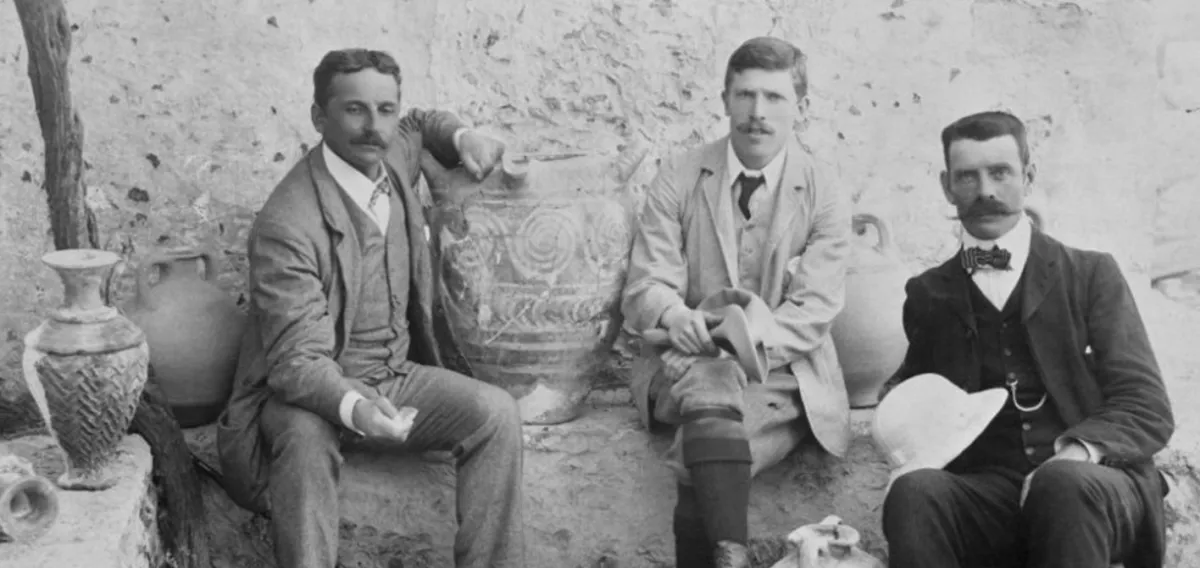 Photo: Arthur Evans, via greekherald.com.au
What it actually took was an architect from England who first fell in love with the problem at the age of fourteen.
A Schoolboy's Obsession
Michael Ventris was not a typical kid. Born in 1922 to a British army officer and a half-Polish mother with a passion for art, he grew up between countries and languages, picking up Polish, French, German, and Swiss-German almost as a hobby. By the time he was a teenager, languages weren't something he studied — they were something he played with, the way other kids played sports.
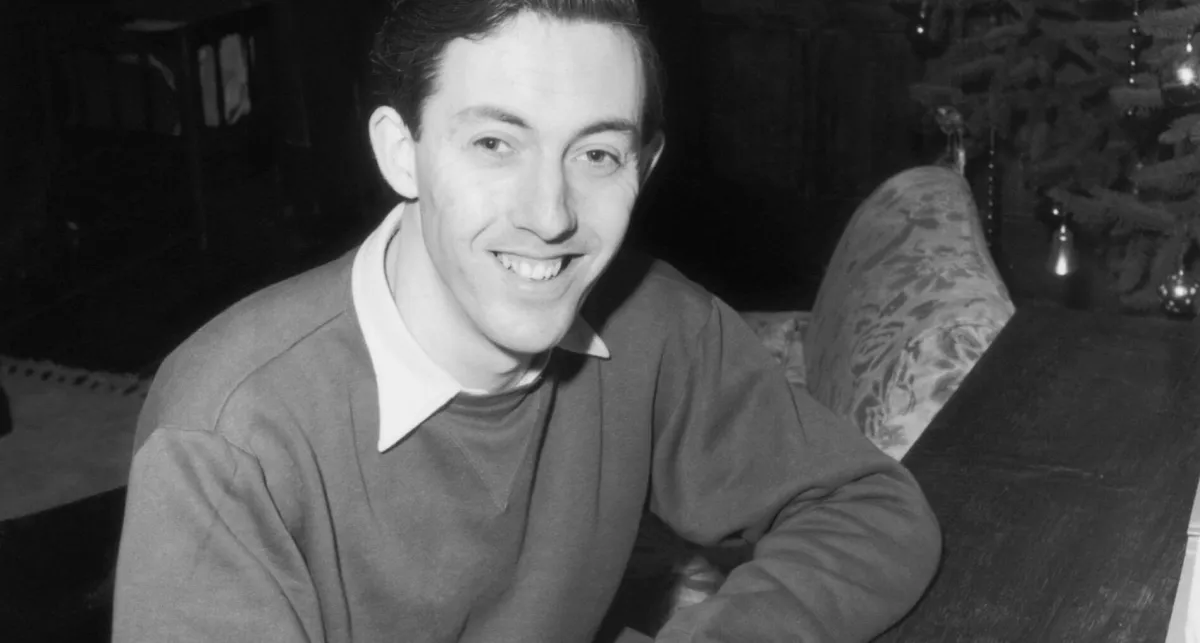 Photo: Michael Ventris, via portalclasico.com
At fourteen, he attended a lecture by Arthur Evans himself. Evans showed slides of Linear B tablets and told the audience, with the confidence of a man who had spent decades on a problem, that the script remained undeciphered and would likely stay that way. Ventris walked out of that lecture hall not discouraged but electrified. He had just been handed the greatest puzzle he'd ever seen.
He would spend the next seventeen years chipping away at it — in between school, military service during World War II, and a full career as a practicing architect.
The Problem with Being an Expert
Here's the thing about professional academics and deeply entrenched problems: expertise can be its own kind of trap. By the 1940s and early 1950s, the leading scholars working on Linear B had built entire careers on the assumption that the script encoded a non-Greek language. To suggest otherwise wasn't just a different hypothesis — it was an attack on decades of published work and professional identity.
Ventris had no such investment. He came to the problem clean, without a reputation to protect or a theory to defend. He corresponded with experts, read everything published on the subject, and built meticulous charts comparing symbol frequencies across different tablets. He worked the way a codebreaker works — systematically, combinatorially, without sentimentality about where the evidence was supposed to lead.
In 1952, following years of increasingly detailed analysis, he made a move that the credentialed scholars had largely avoided: he tested the hypothesis that Linear B might actually encode an early form of Greek. The results were startling. Words began to resolve. Repeated symbol clusters matched Greek terms for common commodities — grain, livestock, oil. Place names on the tablets aligned with known Mycenaean sites on the Greek mainland.
Linear B wasn't Minoan at all. It was Greek — a form of the language roughly five hundred years older than Homer.
The Broadcast That Changed Everything
On July 1, 1952, Ventris shared his findings in a BBC radio program almost as casually as a man describing a weekend project. He was thirty years old. He had no doctorate, no academic post, no institutional affiliation. What he had was a solution.
The scholarly community's reaction was mixed, ranging from cautious interest to outright skepticism. But as other researchers began independently testing his decipherment framework against the tablets, the results held. Linguist John Chadwick, a Cambridge classicist who had been working the problem from a more traditional angle, became Ventris's collaborator and eventual co-author. Together they published Documents in Mycenaean Greek in 1956, the definitive text on the decipherment.
The book landed like a small earthquake in classical studies. Suddenly, scholars had written records from the Mycenaean civilization — the Bronze Age Greeks who had preceded the classical world by centuries. The tablets turned out to be largely administrative records: inventories of sheep, jars of olive oil, lists of workers. Unglamorous stuff, maybe. But in those mundane lists was proof that a sophisticated Greek-speaking bureaucracy had existed more than a thousand years before Plato.
What the Outsider Saw That the Insiders Missed
Ventris's success wasn't accidental, and it wasn't just luck. His outsider status gave him a specific kind of cognitive freedom that the professionals lacked. He wasn't anchored to Evans's original Minoan hypothesis because he hadn't built his career defending it. He could follow the data wherever it pointed, even when it pointed somewhere uncomfortable.
There's a lesson buried in that, one that goes beyond ancient languages. Some problems accumulate so many layers of expert assumption that the only person who can see clearly is someone who never learned what they were supposed to believe in the first place. Ventris didn't know Linear B was unsolvable. So he solved it.
Tragically, he never fully absorbed the recognition his work deserved. In September 1956 — just weeks after Documents in Mycenaean Greek was published — Ventris died in a car accident near London. He was thirty-four years old.
A Legacy Written in Clay
Today, the decipherment of Linear B is considered one of the great intellectual achievements of the twentieth century, ranked alongside the cracking of the Enigma code and the translation of the Rosetta Stone. Ventris is celebrated in classical studies programs around the world — programs he never formally attended.
His story doesn't argue against expertise. Chadwick's classical training was essential to refining and publishing the work. But it does argue powerfully for the value of curiosity that refuses to be credentialed out of a problem. The fourteen-year-old boy who walked out of Arthur Evans's lecture with a burning question eventually answered it. He just had to build a few houses first.