Wrong Place, Right Time: Five Career Accidents That Changed America
The Telegraph Boy Who Rewrote Wall Street
Edward Calahan was sixteen years old when he lied about his experience to get a job as a telegraph operator in New York City. It was 1860, and he desperately needed work to help support his family. The hiring manager at the Western Union office took one look at this scrawny kid from Boston and almost sent him packing.
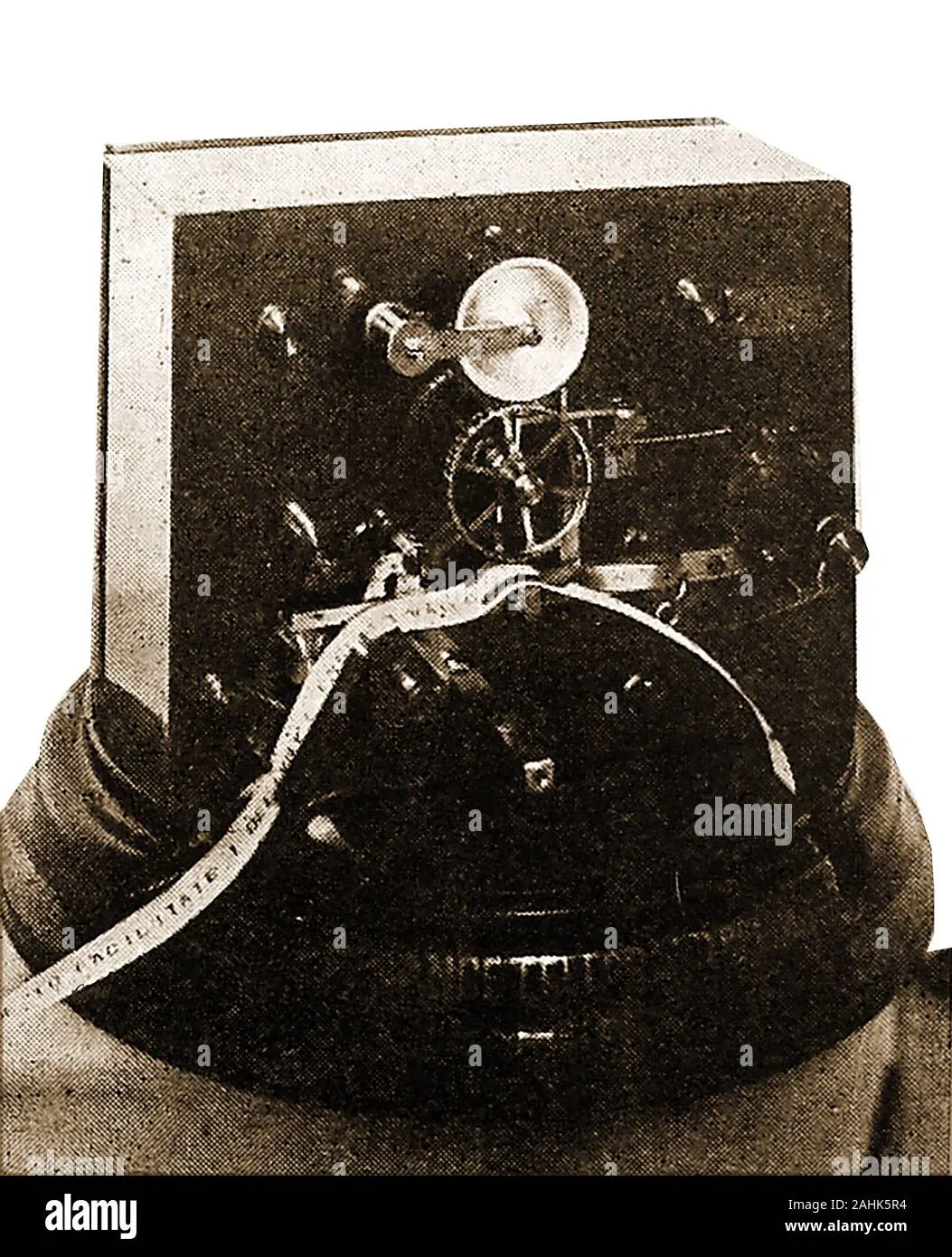 Photo: Edward Calahan, via c8.alamy.com
But they were short-staffed, and Calahan was persistent. Within weeks, he was handling some of the most important financial communications in America. Stock prices, trade confirmations, market updates — all flowing through the hands of a teenager who wasn't supposed to be there.
That "mistake" changed everything.
Calahan noticed that the existing telegraph system was hopelessly inefficient for financial data. Brokers would crowd around a single telegraph operator, shouting orders and trying to get the latest prices. Information moved slowly, errors were common, and fortunes were made or lost on who heard news first.
So this unqualified kid invented something that qualified engineers hadn't thought of: the stock ticker.
His automatic printing telegraph could simultaneously transmit stock prices to multiple locations, updating every broker's office in real time. By 1867, Calahan's "wrong place, right time" hiring had revolutionized American finance. Wall Street suddenly moved at the speed of electricity instead of the speed of shouting.
The Postmaster Who Accidentally Unified America
Montgomery Blair never wanted to be Postmaster General. When Abraham Lincoln offered him the position in 1861, Blair was a successful lawyer who considered the postal service a bureaucratic backwater. He accepted reluctantly, planning to serve briefly and return to his lucrative private practice.
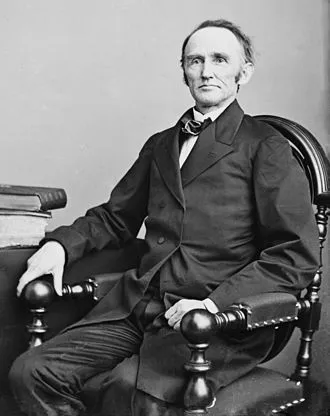 Photo: Montgomery Blair, via upload.wikimedia.org
Lincoln had chosen Blair not for his postal expertise — he had none — but for his political connections and administrative skills. It seemed like a safe, temporary appointment for a job nobody considered particularly important.
Blair had other ideas.
Within months, he was proposing radical changes that horrified postal traditionalists. Free city delivery? Unthinkable — people had always collected their mail at post offices. Railway mail cars? Dangerous — what if the trains crashed? Standardized addressing systems? Unnecessary — local postmasters knew their communities.
But Blair wasn't bound by "how things had always been done." He saw the postal service as a tool for national unity during the Civil War. His innovations didn't just move mail faster — they connected a fracturing nation.
By 1863, his reforms had created the foundation of modern American communication. Home delivery meant families could receive news from the battlefield. Railway mail cars meant letters could cross the continent in days instead of weeks. Standardized addressing meant the postal service could handle the massive volume of wartime correspondence.
The "wrong" choice for Postmaster General had accidentally built the communication infrastructure that helped hold the Union together.
The Housewife Who Became America's Computer Pioneer
Betty Holberton was a mathematics student at the University of Pennsylvania when World War II changed her plans. She wanted to teach high school math, but the war created unexpected opportunities for women in technical fields.
In 1945, the Army was desperately seeking people to program ENIAC, the world's first general-purpose computer. They needed mathematicians, but most qualified male candidates were overseas or working on other war projects. So they turned to female math graduates — women who had never seen a computer because computers had just been invented.
Holberton was hired despite having zero programming experience. How could she have experience with something that didn't exist yet?
This turned out to be perfect preparation.
Without preconceptions about how programming "should" work, Holberton and her colleagues invented the fundamental concepts of computer programming from scratch. They developed the first programming languages, created the first software debugging techniques, and established the basic principles that still govern how we write computer code today.
Holberton specifically invented the concept of subroutines — reusable pieces of code that made programming exponentially more efficient. She also helped develop the first computer language that used words instead of just numbers, making programming accessible to people who weren't mathematics experts.
By the 1950s, the "unqualified" housewife had become one of the most important computer scientists in America. Her work laid the foundation for every piece of software ever written.
The Failed Farmer Who Fed the World
George Washington Carver was supposed to be an artist. He was the first Black student at Iowa State University, studying painting and drawing with dreams of becoming a professional artist. But his academic advisor, concerned about limited career prospects for Black artists in 1890s America, convinced him to switch to agriculture.
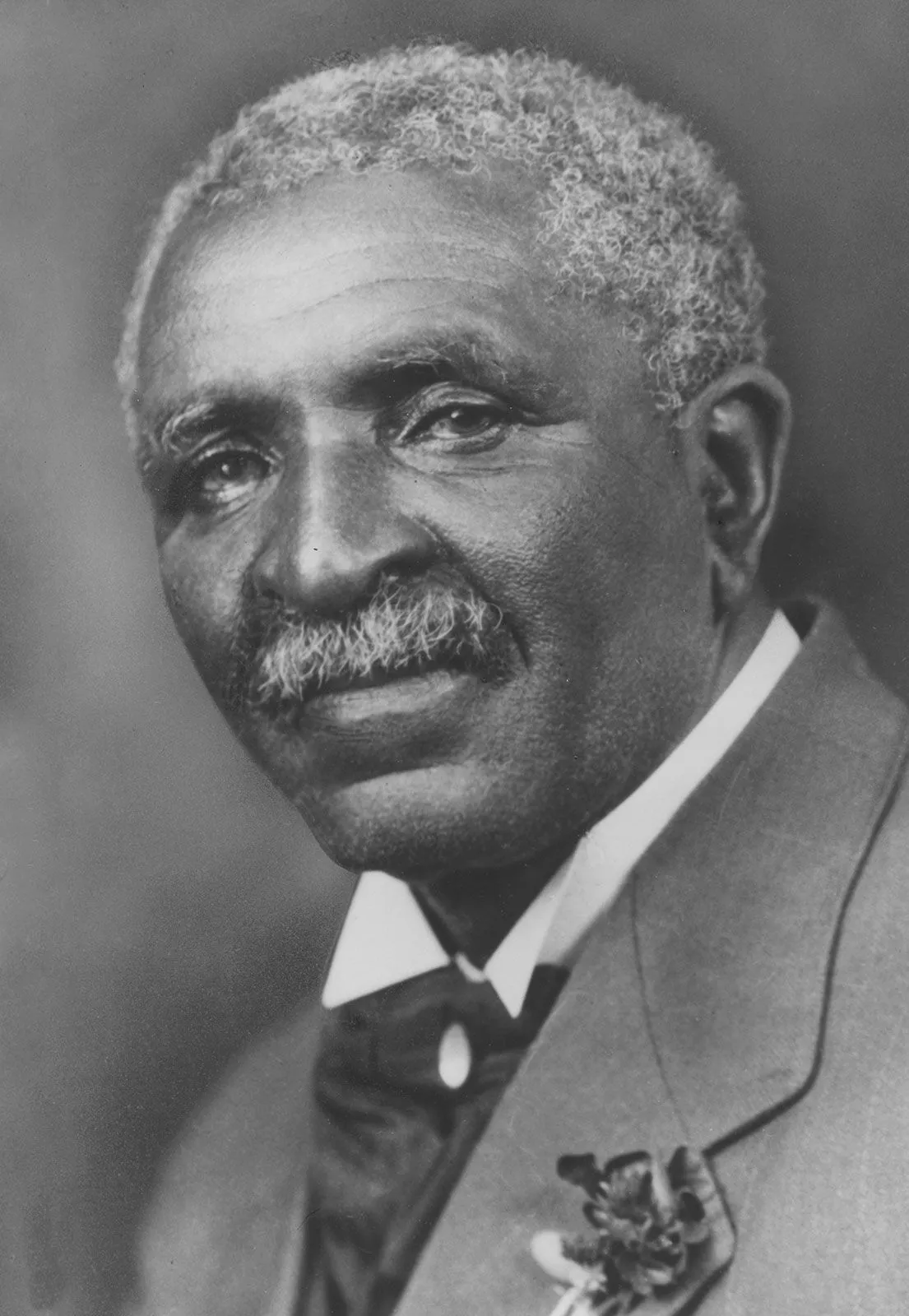 Photo: George Washington Carver, via cdn.britannica.com
It seemed like a compromise, a practical choice that abandoned his real passion for something more "realistic." Carver reluctantly agreed, expecting to spend his career teaching basic farming techniques.
That reluctant career change transformed American agriculture.
Carver brought an artist's eye to farming problems that agricultural experts had been tackling with conventional thinking. Instead of seeing depleted soil as an engineering problem, he saw it as a complex biological ecosystem. Instead of viewing crop rotation as a mathematical equation, he understood it as a natural rhythm.
His artistic training taught him to observe subtle details that others missed. He noticed how different plants affected soil chemistry, how root systems interacted with nutrients, how seemingly unrelated factors created cascading effects throughout farming systems.
Those observations led to innovations that revolutionized Southern agriculture. His crop rotation techniques restored millions of acres of cotton-depleted farmland. His development of alternative crops like peanuts and sweet potatoes gave farmers economic options beyond the boom-and-bust cycle of cotton.
By the 1920s, the "failed" artist had developed over 300 products from peanuts alone, creating entire industries and transforming the Southern economy.
The Dropout Who Saved American Medicine
Mary Eliza Mahoney was working as a maid at the New England Hospital for Women when she made a decision that would change American healthcare forever. In 1878, at age 33, she applied to the hospital's nursing school — despite having no formal medical training and minimal education.
The hospital's nursing program was notoriously difficult. It required three years of intensive training, including night shifts, surgical assistance, and care for infectious disease patients. Most applicants were young women from middle-class families with strong educational backgrounds.
Mahoney was older, poorer, and Black in an era when racial barriers seemed insurmountable. Every rational calculation suggested she would fail.
She didn't just succeed — she graduated at the top of her class and became America's first professionally trained Black nurse.
But her real impact came from what she did next. Instead of accepting a comfortable position at a prestigious hospital, Mahoney chose to work in underserved communities where medical care was scarce or nonexistent.
She brought professional nursing standards to places that had never seen them. She trained other Black women as nurses, creating a pipeline of healthcare professionals for communities that desperately needed them. She established nursing practices in rural areas, inner cities, and immigrant neighborhoods where qualified medical care was virtually unknown.
By 1900, Mahoney had helped create a network of trained Black nurses working throughout New England and beyond. Her influence extended far beyond individual patient care — she had demonstrated that professional medical training could bridge racial and economic barriers to create better health outcomes for everyone.
The Pattern Behind the Accidents
These five stories share a common thread: each person succeeded precisely because they weren't the "obvious" choice. Their lack of conventional qualifications freed them from conventional thinking.
Calahan could reimagine financial communication because he wasn't invested in existing systems. Blair could transform the postal service because he wasn't bound by postal traditions. Holberton could invent programming concepts because programming didn't have established rules yet. Carver could revolutionize agriculture because he saw farming through an artist's eyes. Mahoney could transform healthcare access because she understood what it meant to be excluded.
Their stories remind us that expertise isn't always about credentials. Sometimes the most qualified person is the one who brings fresh perspective to old problems. Sometimes the "wrong" choice turns out to be the only choice that could have worked.
In a world that increasingly values specialization and formal training, these five Americans prove that breakthrough thinking often comes from the margins — from people who weren't supposed to be there, solving problems they weren't supposed to understand, in ways nobody else had thought to try.