The Architect Who Solved History's Greatest Riddle in His Spare Time
The Boy Who Fell in Love with Ancient Mysteries
Most fourteen-year-olds spend their free time playing sports or hanging out with friends. Michael Ventris spent his sketching mysterious symbols from ancient Crete and trying to decode what scholars called "the most challenging puzzle in archaeology."
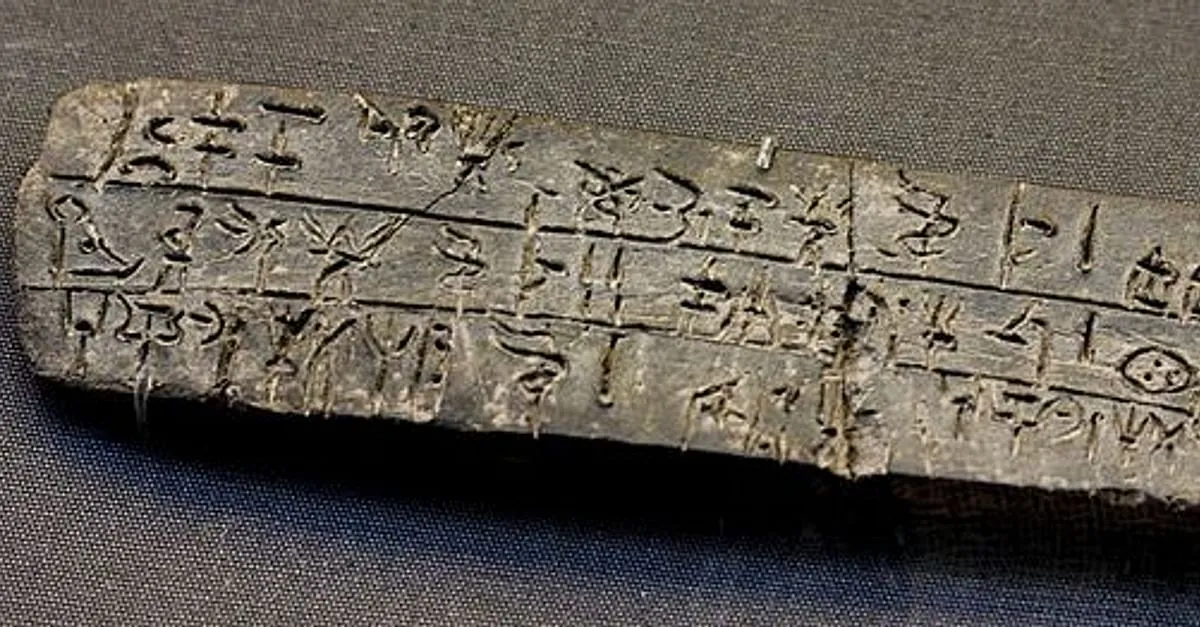 Photo: Michael Ventris, via hellenicmoon.com
It was 1936, and Ventris had just attended a lecture by archaeologist Sir Arthur Evans about Linear B — a script discovered on clay tablets at the palace of Knossos. Evans believed the writing belonged to some unknown ancient civilization, completely unrelated to Greek. The symbols looked like nothing anyone had seen before: combinations of lines, curves, and pictographs that seemed to follow no recognizable pattern.
While professional linguists and archaeologists declared the script undecipherable, young Ventris saw something different. He saw a puzzle waiting to be solved.
Building Houses, Chasing Ghosts
Ventris didn't pursue classics or linguistics in university. Instead, he studied architecture at the Architectural Association School in London, graduating in 1948 with every intention of designing buildings, not decoding ancient languages. He established a successful practice, married, started a family, and by all appearances had settled into the conventional life of a post-war British professional.
But Linear B never left him alone.
Every lunch break, every evening after work, every weekend morning before his family woke up, Ventris returned to those mysterious symbols. He covered his home office walls with charts, frequency analyses, and pattern studies. His wife Betty grew accustomed to finding him hunched over clay tablet photographs at 2 AM, muttering about syllabic patterns and phonetic values.
The academic establishment largely ignored him. After all, what could an architect possibly contribute to a field dominated by philologists with decades of training? Ventris didn't have a PhD in ancient languages. He'd never published a paper on Bronze Age civilizations. He was, by every measure that mattered to the scholarly community, completely unqualified.
That turned out to be his greatest advantage.
The Breakthrough That Shocked the World
By 1952, Ventris had been working on Linear B for sixteen years. Professional scholars had made little progress, convinced the script represented some non-Greek language. But Ventris approached the problem like an architect approaches a complex structural challenge: methodically, systematically, without preconceptions about what the answer should look like.
He created detailed frequency charts showing which symbols appeared most often. He mapped out patterns of symbol combinations. Most importantly, he approached the tablets not as a classical scholar protecting established theories, but as a problem-solver looking for any pattern that might crack the code.
The breakthrough came on a Tuesday evening in June. Ventris was analyzing place names on the tablets when he noticed something that made his heart race. If he assumed certain symbols represented specific sounds — sounds that happened to be Greek — then some of the words began to make sense.
Not just sense. Perfect sense.
The tablets weren't written in some unknown ancient language. They were written in Greek — Greek that was 500 years older than Homer, Greek from the height of Mycenaean civilization.
When Amateurs Embarrass the Experts
Ventris's announcement sent shockwaves through the academic world. On June 1, 1952, he gave a BBC radio talk titled "Deciphering Europe's Earliest Greek Records." The response was immediate and divided. Some scholars embraced his findings. Others dismissed them outright, unable to accept that an outsider had solved what they couldn't.
But the evidence was overwhelming. Ventris had shown that Linear B recorded inventories, land tenure records, and administrative documents from Mycenaean palaces. Suddenly, the Bronze Age Greek world came alive in unprecedented detail. Historians could read the actual words of people who had lived 3,500 years ago.
The tablets revealed a sophisticated bureaucratic system, detailed records of livestock and land ownership, and even the names of gods who would later appear in Homer's epics. It was like finding a direct telephone line to ancient Greece.
The Price of Passion
Ventris never lived to see the full impact of his discovery. In 1956, just four years after his breakthrough, he died in a car accident near his home in England. He was only 34 years old.
But his legacy transformed our understanding of ancient Greece. The decipherment of Linear B proved that Greek civilization was far older and more sophisticated than anyone had imagined. It showed that the world Homer described in the Iliad and Odyssey wasn't pure mythology — it was built on memories of a real Bronze Age civilization.
More importantly, Ventris proved something that academics often forget: sometimes the most important breakthroughs come from the most unexpected places. His success wasn't despite his lack of formal training in linguistics — it was because of it.
The Outsider's Advantage
Professional scholars brought decades of theoretical knowledge to Linear B, but they also brought decades of assumptions. They "knew" what ancient scripts should look like. They "understood" how languages evolved. They had theories to protect and reputations to maintain.
Ventris brought none of that baggage. He brought fresh eyes, systematic thinking, and the kind of passionate obsession that can only sustain itself outside institutional pressure. He could afford to be wrong because he had nothing professional to lose. That freedom allowed him to see patterns that trained experts had missed.
His story reminds us that expertise isn't always about credentials. Sometimes it's about caring enough to keep looking when everyone else has given up. Sometimes the person best qualified to solve a problem is the person who doesn't know it's supposed to be impossible.
In a world that increasingly values specialization and formal training, Michael Ventris stands as a testament to the power of passionate amateurs. He never held a university position, never received a research grant, never published in academic journals during his lifetime.
He just solved the unsolvable, one lunch break at a time.