The Jailhouse Lawyer Who Cracked the Constitution: From Cell Block to Civil Rights Champion

In the summer of 1961, a pencil-written letter arrived at the U.S. Supreme Court. The handwriting was shaky, the legal arguments amateur, and the author was serving time for breaking into a pool hall in Panama City, Florida.
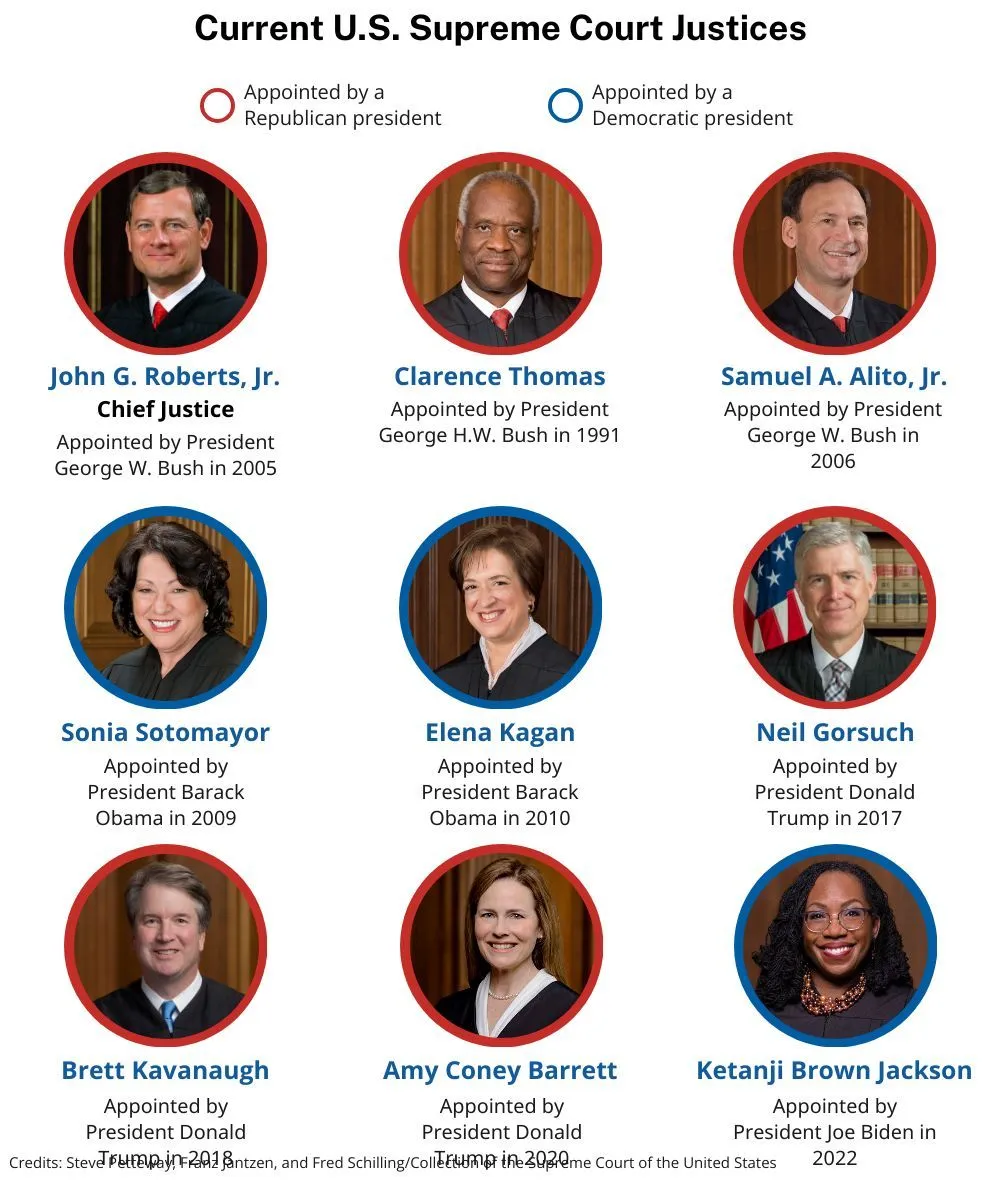 Photo: U.S. Supreme Court, via cdn.britannica.com
Clarence Earl Gideon had never been to law school. Hell, he'd barely been to any school. But from his cell in Raiford State Prison, this career criminal was about to accomplish something that eluded Harvard-trained attorneys: he was going to rewrite the Constitution.
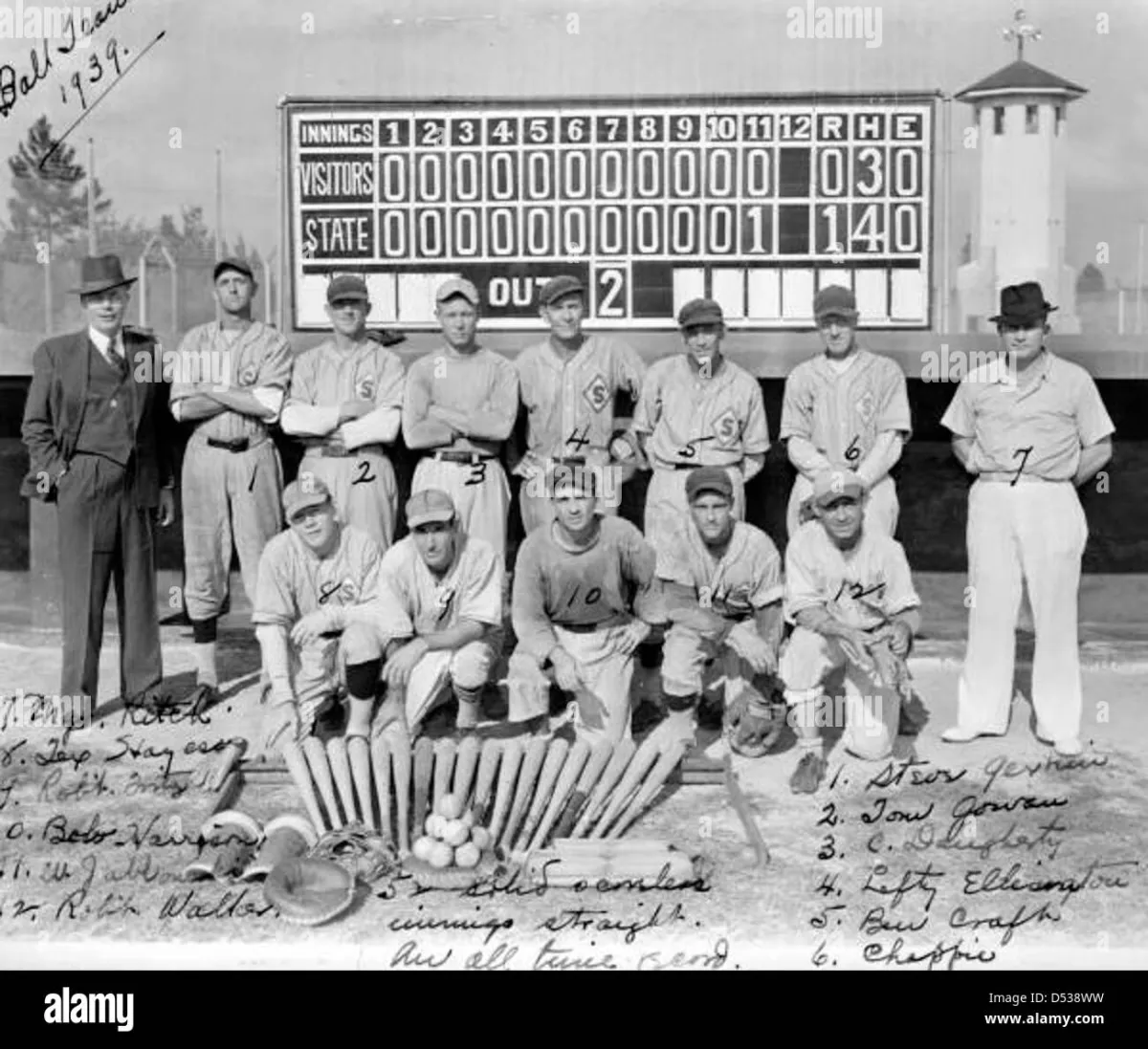 Photo: Raiford State Prison, via c8.alamy.com
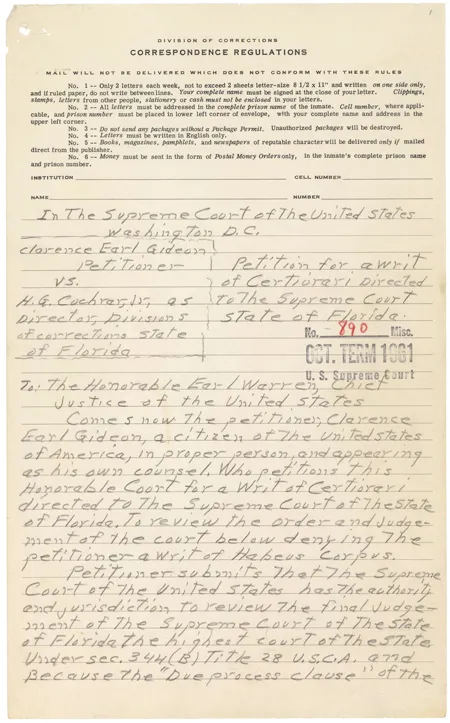 Photo: Clarence Earl Gideon, via historicmissourians.shsmo.org
His case would become Gideon v. Wainwright, the landmark 1963 decision that guaranteed every American — rich or poor — the right to legal representation. But the real story isn't about the Supreme Court ruling. It's about how a man with an eighth-grade education taught himself enough law to argue his way to freedom and change the system that had failed him.
The Unlikely Scholar
Gideon's early life read like a case study in how not to succeed in America. Born in 1910 to an alcoholic father and overwhelmed mother in rural Missouri, he was running away from home by age 14. By 16, he was stealing cars. By his twenties, he was in and out of prison for burglary, armed robbery, and escape attempts.
Traditional wisdom said men like Gideon were beyond redemption — career criminals destined to cycle through the system until they died behind bars. Gideon had a different theory: maybe the system was the problem.
During his various incarcerations, something unexpected happened. While other inmates lifted weights or played cards, Gideon haunted the prison library. He read everything: law books, constitutional theory, Supreme Court decisions. Guards found him scribbling notes by flashlight after lights-out, teaching himself legal concepts that law students struggled to master.
"I always believed that the primary reason for my conviction was that I had no lawyer," he would later write. If that was true, then learning law wasn't just intellectual curiosity — it was survival.
The Case That Started It All
In 1961, Gideon was arrested for breaking into the Bay Harbor Pool Room in Panama City and allegedly stealing wine, beer, and coins from a cigarette machine. The evidence was thin — basically one witness who claimed to see Gideon near the building around the time of the break-in.
When Gideon appeared in court, he made a simple request: "Your Honor, I request this court to appoint counsel to represent me in this trial."
Judge Robert McCrary's response was swift: "Mr. Gideon, I am sorry, but I cannot appoint counsel to represent you in this case. Under the laws of the state of Florida, the only time the court can appoint counsel to represent a defendant is when that person is charged with a capital offense."
Gideon represented himself as best he could, but the outcome was predictable. The jury found him guilty in less than an hour. He was sentenced to five years in state prison.
Most people would have accepted their fate. Gideon went to the law library.
Midnight Oil and Constitutional Theory
What Gideon discovered in his legal research was both infuriating and illuminating. The Sixth Amendment to the Constitution guaranteed the right to counsel in criminal prosecutions. The Supreme Court had ruled in 1938 that this applied to federal cases. But in state courts — where the vast majority of criminal cases were tried — the right only applied if you were facing the death penalty.
This created a bizarre two-tier system of justice. A federal defendant charged with stealing a letter could get a lawyer, but a state defendant facing years in prison for burglary could not. Wealth determined access to justice more than the severity of the crime.
Gideon spent months crafting his petition to the Supreme Court, writing and rewriting until his argument was as sharp as any law school brief. He argued that the Fourteenth Amendment's guarantee of equal protection meant that all defendants — federal or state, rich or poor — deserved competent legal representation.
His logic was simple: "The United States Supreme Court. Not by gimmicks or tricks or technicalities, but by the plain truth. This petition will show that the lower courts have not given a fair trial."
David vs. The Legal Establishment
When Gideon's petition reached the Supreme Court, it landed on the desk of law clerks who had graduated from the nation's elite law schools. They expected to find the usual jailhouse rambling — conspiracy theories, procedural complaints, desperate appeals for attention.
Instead, they found a cogent constitutional argument that cut to the heart of American justice. Gideon had identified a fundamental flaw in the legal system and proposed a solution backed by solid precedent.
The Court agreed to hear his case — a decision so rare for handwritten petitions that it made national news. Suddenly, this career criminal from rural Florida had accomplished something most lawyers never would: getting the Supreme Court's attention.
But Gideon faced a problem. He needed a lawyer to argue his case, and he was still in prison. The Court appointed Abe Fortas, a future Supreme Court justice, to represent him. The irony was perfect: Gideon's argument for the right to counsel would be presented by one of America's most distinguished attorneys.
The Decision That Changed Everything
On March 18, 1963, the Supreme Court ruled unanimously in Gideon's favor. Justice Hugo Black wrote: "Reason and reflection require us to recognize that in our adversary system of criminal justice, any person haled into court, who is too poor to hire a lawyer, cannot be assured a fair trial unless counsel is provided for him."
The decision overturned Gideon's conviction and established the principle that competent legal representation was a fundamental right, not a luxury for those who could afford it.
But the real vindication came when Florida retried Gideon — this time with a lawyer. The same evidence that had convicted him before fell apart under competent cross-examination. The jury acquitted him in less than an hour.
The Ripple Effect
Gideon's victory triggered a revolution in American criminal justice. States scrambled to establish public defender systems. Law schools created clinical programs to train poverty lawyers. The entire infrastructure of legal aid expanded to serve defendants who had previously faced the system alone.
The impact was immediate and dramatic. Within a year of the decision, an estimated 2,000 prisoners in Florida alone had been freed or granted new trials. Across the nation, conviction rates dropped as competent defense attorneys challenged weak cases that had previously resulted in easy guilty verdicts.
Gideon himself became something of a folk hero — the little guy who took on the system and won. He received hundreds of letters from prisoners and civil rights activists who saw his case as proof that justice was possible, even for society's outcasts.
Beyond the Courtroom
The broader lesson of Gideon's story extends far beyond criminal law. He proved that expertise isn't always found in institutions, that sometimes the people closest to a problem understand it better than the experts who study it from a distance.
Gideon's legal education came from necessity, not privilege. He learned constitutional law because his freedom depended on it. That motivation gave him insights that escaped attorneys who had never faced prison themselves.
His success also demonstrated something quintessentially American: the belief that the system, however flawed, contains within it the tools for its own reform. Gideon didn't try to overthrow the legal system — he used its own principles to make it more just.
The Price of Being Right
Gideon was released from prison in 1963 and briefly enjoyed celebrity status. He appeared on television, spoke at law schools, and was profiled in national magazines. But fame couldn't erase a lifetime of struggle.
He continued to have run-ins with the law — mostly minor offenses related to his drinking. The man who had won the right to counsel for millions of Americans couldn't quite figure out how to stay out of trouble himself.
Gideon died in 1972, largely forgotten except by legal scholars and civil rights historians. His grave in Missouri went unmarked for years until the American Civil Liberties Union placed a headstone honoring his contribution to American justice.
The Jailhouse Legacy
Today, every public defender's office in America traces its existence to Clarence Earl Gideon's handwritten petition. His case established the principle that justice isn't just for those who can afford it — a radical idea that continues to shape American law.
But perhaps Gideon's greatest legacy is the proof that transformative change can come from the most unlikely places. Sometimes the person who sees the system most clearly is the one it has failed most completely.
In an era when expertise is often equated with credentials, Gideon reminds us that wisdom can emerge from experience, determination, and a pencil stub in a prison cell. His story proves that in America, even the most powerless person can move mountains — if they're willing to learn how to write the right letter.