From Refugee to Revolution: How a German Immigrant Built America's Gaming Empire in Secret
The Boy Who Escaped with Nothing
In 1938, a 16-year-old Jewish boy named Ralph Baer stepped off a ship in New York Harbor with two suitcases and a head full of dreams that seemed impossibly distant. Behind him lay Nazi Germany, where his family's leather goods business had been destroyed and their future erased overnight. Ahead lay America—a country that promised opportunity but guaranteed nothing.
What nobody could have predicted was that this refugee teenager, who would spend his first years in America working in a factory for $12 a week, would eventually create an entertainment revolution that would reshape how the world plays, learns, and connects.
The Long Road to Recognition
Baer's path to changing the world wasn't paved with venture capital or Silicon Valley connections. After serving in World War II—fighting against the very regime that had forced his family to flee—he used the GI Bill to study television engineering. By the 1960s, he was working as a senior engineer at Sanders Associates, a defense contractor in New Hampshire, designing military radar systems and missile guidance equipment.
It was respectable work, steady work, invisible work. And it was in this world of classified projects and government contracts that Baer began nurturing an idea that seemed completely disconnected from his day job: What if you could play games on a television screen?
The Spare Room Laboratory
In 1966, while riding a bus to work, Baer had what he later called his "eureka moment." He realized that millions of American families owned television sets that sat idle for hours each day. What if those screens could become interactive playgrounds?
Most engineers would have filed away such a thought as interesting but impractical. Baer went home and started building.
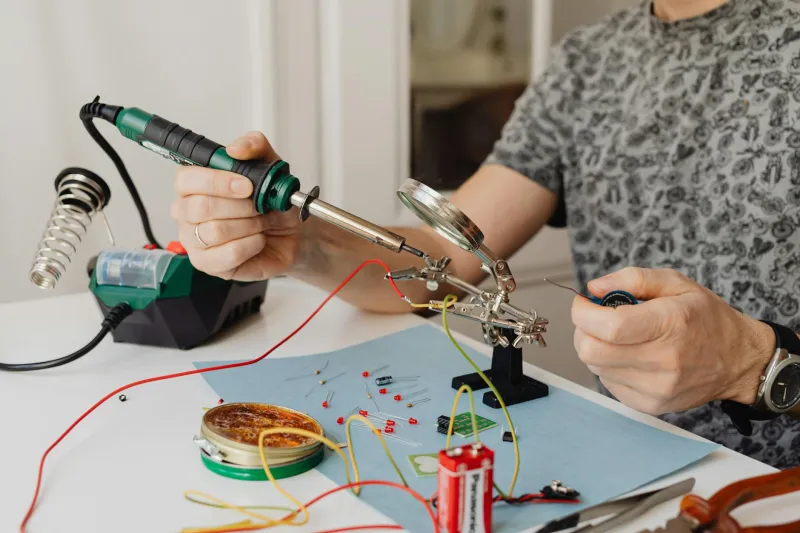
Working nights and weekends in a spare room at Sanders Associates, using company time that his supervisors grudgingly allowed, Baer began constructing what would become the "Brown Box"—a prototype gaming console that could display simple games on any television screen. The device was roughly the size of a briefcase, covered in fake wood grain, with basic switches and knobs that controlled square dots moving across the screen.
It looked like nothing special. It was everything special.
The Game That Changed Everything
Baer's first successful game was deceptively simple: two white squares that players could move up and down on either side of the screen, bouncing a white dot back and forth between them. He called it tennis. The world would later know variations of this concept as Pong, but Baer's version came first—developed in complete obscurity, with no fanfare, no press coverage, and no understanding of what he was unleashing.
The immigrant mentality that had driven Baer to rebuild his life from nothing now pushed him to perfect his invention. He added more games: handball, volleyball, even a light gun that could "shoot" targets on the screen. Each addition was painstakingly crafted in that spare room laboratory, tested and retested by an engineer who understood that getting it right mattered more than getting it fast.
The Industry Nobody Saw Coming
In 1972, after years of development and patent applications, Baer's Brown Box was licensed to Magnavox and released as the Odyssey—the world's first home video game console. The marketing was terrible, the distribution limited, and most Americans had no idea what they were looking at.
But a few visionaries understood. Nolan Bushnell, who would found Atari, saw the Odyssey at a trade show and was inspired to create Pong for arcades. Shigeru Miyamoto, future creator of Super Mario Bros., would later cite early home consoles as formative influences. An entire industry began growing from the seeds Baer had planted in that New Hampshire spare room.
The Forgotten Pioneer
For decades, Baer watched as others received credit for inventing video games. Bushnell was hailed as the father of the industry. Companies like Nintendo and Sony built empires worth billions. Gaming evolved from simple white squares to photorealistic worlds that captivate hundreds of millions of players worldwide.
Baer kept working, kept inventing, kept fighting patent battles to protect his innovations. He developed the light gun technology used in Duck Hunt, created handheld electronic games, and continued pushing the boundaries of interactive entertainment well into his 80s. But outside of engineering circles, his name remained largely unknown.
The Revolution in Retrospect
Today, the video game industry generates more revenue than movies and music combined—over $180 billion annually. Professional gamers fill stadiums. Virtual reality is reshaping education, training, and therapy. Gaming has become America's most influential cultural export, spreading from that spare room in New Hampshire to every corner of the globe.
Ralph Baer, the refugee who arrived with nothing, had created something that touched billions of lives. He proved that the most profound innovations often come not from the obvious places—not from the established entertainment companies or the well-funded research labs—but from the quiet persistence of someone with an outsider's perspective and an immigrant's hunger to build something lasting.
Legacy of the Invisible Revolutionary
Baer passed away in 2014 at age 92, finally receiving recognition as the true father of home video games. His Brown Box sits in the Smithsonian, a testament to what happens when determination meets opportunity in a spare room laboratory.
His story reminds us that America's greatest innovations often come from its newest Americans—people who arrive with nothing but refuse to accept that nothing is all they'll ever have. In Baer's case, that refusal to accept limits didn't just change his own life. It changed how the entire world plays.