The Sound of Doors Slamming
The first time Macon Bolling Allen walked into that examination room in Portland, Maine, in 1844, he probably expected to fail. After all, no Black person had ever been admitted to practice law in America. The very idea seemed impossible.
 Photo: Portland, Maine, via southernmainecoast.com
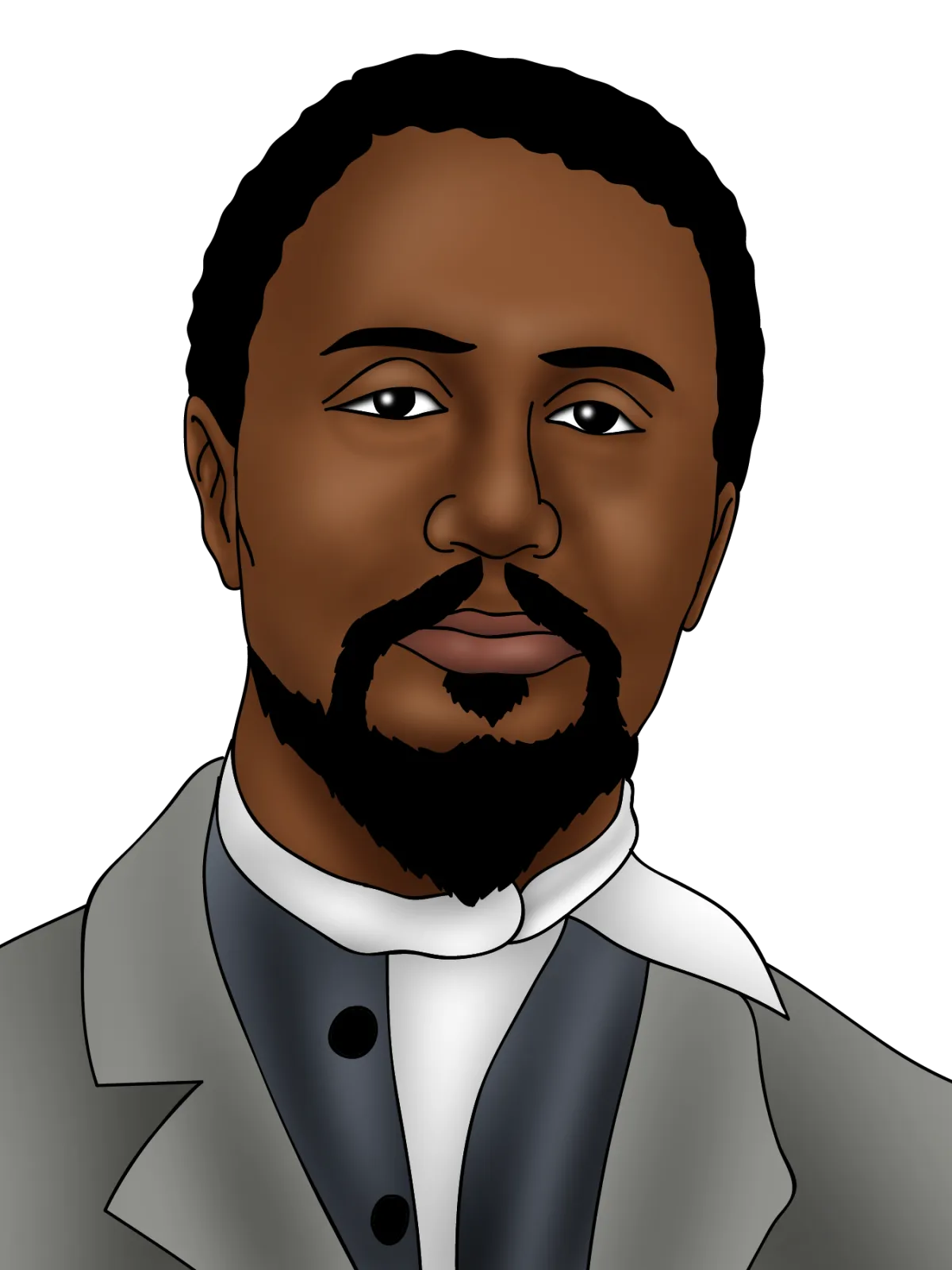 Photo: Macon Bolling Allen, via tuntimo.com
What he couldn't have expected was how educational those failures would become.
Allen failed his first bar examination. Then his second. Then his third. By the fourth attempt, the examiners probably knew his name before he walked through the door. But something remarkable was happening with each rejection: Allen wasn't just taking the test repeatedly—he was learning how to think like a lawyer in ways that traditional law school couldn't teach.
The Unconventional Education of a Legal Pioneer
Macon Allen's path to the law was unlike anything we'd recognize today. Born free in Indiana around 1816, he had limited formal education but an extraordinary mind for justice. While other aspiring lawyers attended Harvard or Yale, Allen taught himself by reading law books in the offices of sympathetic attorneys and studying court proceedings from the gallery.
This unconventional education had an unexpected advantage: Allen learned law not as an abstract academic exercise, but as a living, breathing tool for solving real problems. He watched how successful arguments were constructed, how judges responded to different approaches, and most importantly, how legal reasoning could be used to challenge seemingly unchangeable systems.
When Allen finally passed the bar exam in Maine in 1844—becoming the first Black lawyer in American history—he wasn't just academically prepared. He was battle-tested.
What Failure Actually Taught Him
Each of Allen's failed bar attempts revealed something crucial about how the legal system actually worked. The first failure taught him that knowing the law wasn't enough—he needed to understand how legal arguments were structured and presented. The second failure showed him that examiners were looking for specific types of reasoning, particular ways of analyzing cases.
By the third failure, Allen had begun to grasp something deeper: the law wasn't just a set of rules to memorize, but a language to master. And by the fourth failure, he understood that mastering this language meant learning to think several moves ahead, to anticipate counterarguments, and to build cases that could withstand the most hostile scrutiny.
This wasn't the kind of education you could get in a classroom. It was the kind of preparation that only came from repeated, public failure—and the determination to keep trying anyway.
The Advantage of Starting from Zero
When Allen finally began practicing law, his unusual preparation gave him an unexpected edge. While his contemporaries had learned legal theory in comfortable lecture halls, Allen had learned legal strategy in the harsh reality of repeated rejection. He knew how to construct arguments that could survive skeptical examination because his own legal reasoning had been tested and refined through years of failure.
This practical education served him well when he moved to Boston in 1845 and became the first Black lawyer admitted to practice before a state court. Allen's cases weren't just legal victories—they were masterclasses in strategic thinking, built on years of learning from defeat.
From Maine to Massachusetts to History
Allen's success in Boston opened doors that had seemed permanently sealed. In 1848, he was admitted to practice before the Massachusetts Supreme Judicial Court, and his reputation as a skilled advocate began to spread throughout New England's legal community.
But Allen's most significant cases came in the 1850s, when he began taking on civil rights challenges that would have seemed impossible for a Black lawyer just a decade earlier. His arguments in these cases showed the sophisticated legal thinking that had emerged from his years of preparation—the ability to find creative solutions to seemingly insurmountable legal obstacles.
One case in particular demonstrated Allen's evolved approach: when defending a fugitive slave in Boston, he didn't just argue the immediate legal points. Instead, he constructed a comprehensive challenge to the entire legal framework that allowed slavery to persist in free states. The argument was complex, multi-layered, and built on exactly the kind of strategic thinking that his bar exam failures had forced him to develop.
The Modern Echo
Allen's story resonates powerfully today, when bar exam failure is still seen as a career-ending embarrassment. Recent studies show that about 25% of law school graduates fail the bar exam on their first attempt, and many never try again. But Allen's experience suggests that these failures might actually be valuable preparation for the kind of legal thinking that changes the world.
Consider Kamala Harris, who failed the California bar exam in 1989 before passing on her second attempt and eventually becoming a U.S. Senator and Vice President. Or Michelle Obama, who struggled with standardized tests throughout her academic career but became one of the most effective advocates of her generation.
These modern examples echo Allen's experience: sometimes the people who have to fight hardest for their place in the legal profession develop the strongest advocacy skills.
The Failure Advantage
What made Allen's repeated failures so educational wasn't just the additional study time—it was the way rejection forced him to think more creatively about legal problems. Each failed exam taught him something new about how to construct arguments, how to anticipate challenges, and how to present complex ideas in ways that skeptical audiences could understand.
This kind of resilience-building education is almost impossible to replicate in traditional law school settings. Allen's failures taught him to expect resistance, to prepare for skepticism, and to build arguments that could withstand the most hostile examination. These skills proved invaluable when he began taking on cases that challenged fundamental assumptions about race and justice in 19th-century America.
The Lasting Victory
Macon Allen practiced law for over forty years, eventually moving to South Carolina during Reconstruction and becoming a judge—the first Black person to hold judicial office in the United States. His legal career spanned some of the most turbulent decades in American history, and his success helped prove that Black Americans could excel in even the most demanding intellectual professions.
But perhaps Allen's most important legacy isn't the barriers he broke—it's the example he set for how to turn repeated failure into ultimate success. His story suggests that the people who struggle most to enter elite professions might actually be the best prepared to excel once they arrive.
In today's legal profession, where diversity remains a persistent challenge and bar exam failure is still stigmatized, Allen's story offers a different perspective. Maybe those four failures weren't obstacles to overcome—maybe they were the foundation of everything that came after.
Sometimes the longest path to success turns out to be the most valuable preparation for the challenges that await at the destination.