He Mopped Floors by Day and Solved Equations Nobody Else Could by Night
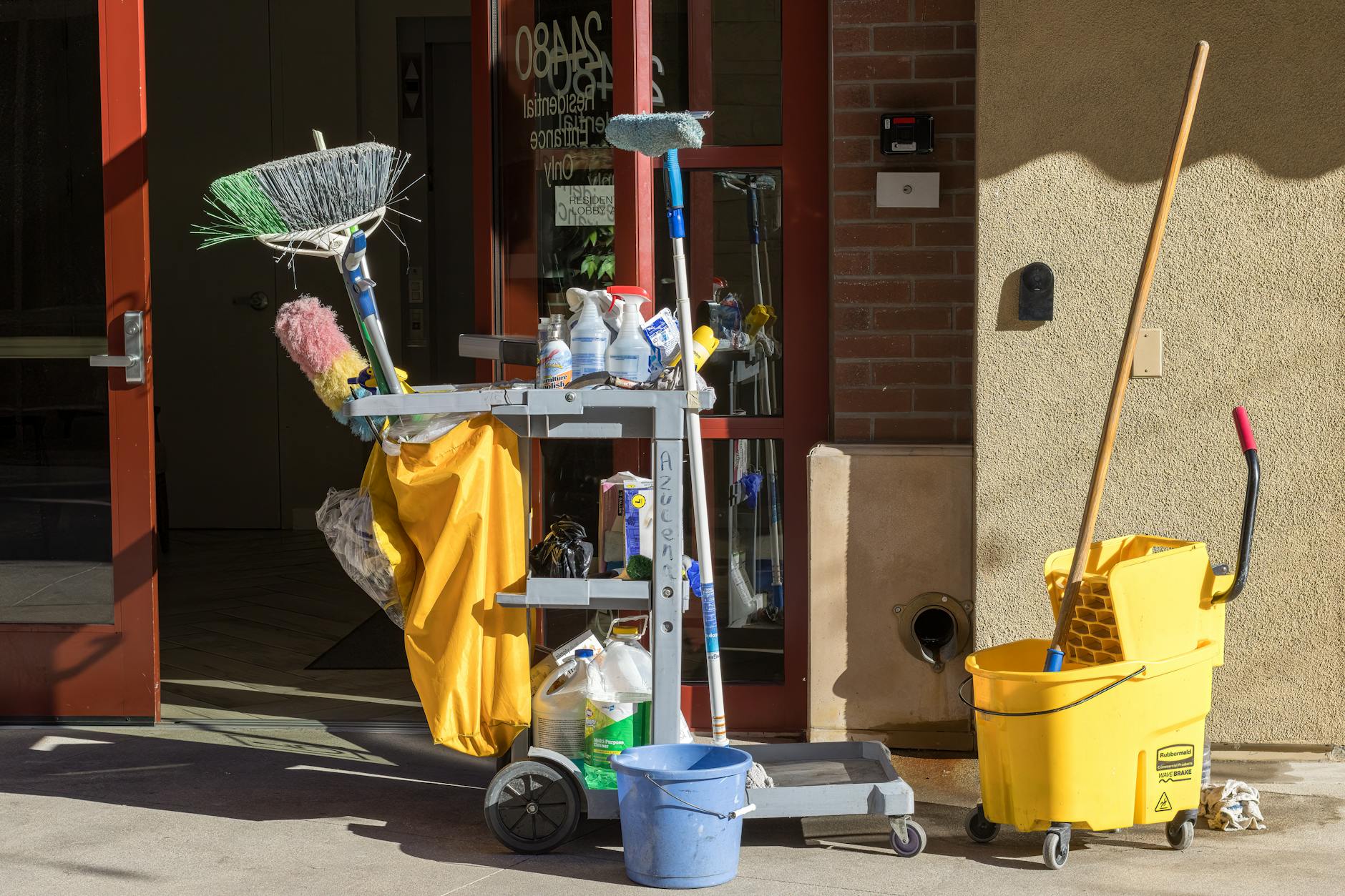
He Mopped Floors by Day and Solved Equations Nobody Else Could by Night
There's a particular kind of invisibility that comes with a janitorial uniform. You move through spaces — offices, corridors, lecture halls — and the people inside them look right past you. For one self-taught mathematical mind working in mid-twentieth century America, that invisibility became something unexpected: the perfect cover for a lifelong obsession with numbers.
His name wasn't in any academic journal. He held no degree. No university claimed him as an alumnus. And yet, in the margins of discarded textbooks and on the backs of requisition forms, he was quietly doing mathematics that stumped men with PhDs.
A Classroom Made of Dumpsters
He grew up in a household where higher education wasn't a realistic conversation. College was for other people — people whose families had money, connections, the right zip code. What he had was a public library card and an appetite that nobody around him quite understood.
It started with a calculus textbook someone had left on a bench near the campus maintenance office where he worked summers as a teenager. He didn't know what calculus was. He just knew the symbols felt like a language he wanted to learn. He checked out every math book the library carried. When the library's collection ran dry, he haunted used bookstores, buying volumes for fifty cents that professors across town were assigning for college credit.
He taught himself algebra, then trigonometry, then analytic geometry — not in sequence, not with a tutor, but in the chaotic, hungry way that self-directed learners often do. He'd get stuck on a concept for weeks. Then something would click, and he'd sprint forward again.
By his late twenties, he was working full-time as a custodian at a state university. The irony wasn't lost on him. He was cleaning the buildings where the education he'd never received was being handed out on a daily basis.
The Notebooks Nobody Was Supposed to See
He never sought an audience. That's one of the details that makes his story so hard to fully process — he wasn't doing this for recognition. The notebooks he filled over thirty-plus years were personal documents, kept in a footlocker in his apartment, shown to almost no one.
He worked on problems he encountered in discarded journals left near faculty recycling bins. He'd fish out a copy of an academic mathematics publication, read a problem that had been posed to the field, and spend weeks — sometimes months — working toward a solution in his off hours. Several of those solutions, it would later emerge, were not only correct but arrived at through approaches that professional mathematicians hadn't considered.
He wasn't trying to publish. He wasn't trying to embarrass anyone. He was just doing what felt natural, the way some people whittle wood or rebuild engines. Math was the thing his brain needed to do.
The Accidental Discovery
The story might have ended there — a footnote that never got written — if not for a facilities supervisor with an unusual habit of actually talking to the people on his crew. During a late-night shift, the supervisor noticed the notebook his custodian had left open on a break room table. He couldn't follow most of what was on the page, but he recognized that it didn't look like doodling. It looked like work.
What followed was the kind of slow, improbable chain of events that defines a forgotten triumph. The supervisor mentioned it to a faculty member he knew. The faculty member asked to see the notebooks. Then another faculty member got involved. Then a quiet, slightly stunned consensus formed: this man had been solving graduate-level problems — and in a few cases, open research questions — for decades, alone, with no institutional support whatsoever.
He was in his sixties by this point. The recognition that came was warm but belated — a few local news stories, an honorary acknowledgment from a university mathematics department, some correspondence with academics who wanted to understand how he'd approached certain problems. It wasn't a Hollywood ending. There was no stadium, no ceremony, no bestselling memoir.
What Gets Celebrated and What Gets Missed
America has always told itself a story about meritocracy — the idea that talent rises, that hard work gets noticed, that genius finds its way to the surface regardless of where it starts. His life complicates that story in ways worth sitting with.
He had the talent. He had the work ethic. What he didn't have was access — to mentors, to institutional resources, to the kind of social networks that turn private ability into public achievement. His mathematical mind was every bit as capable as those of the credentialed men working in the buildings he cleaned. The difference was circumstance, not capacity.
How many others like him have there been? How many notebooks have ended up in landfills because nobody happened to glance at the right page at the right moment? His story got retrieved from obscurity largely by accident. Most don't.
There's something quietly devastating about that. And something worth remembering the next time we talk about who America produces versus who America actually sees.
His greatest proof, in the end, wasn't written in any journal. It was the simple, stubborn fact of his existence — a man who loved mathematics more than mathematics ever officially loved him back, and kept going anyway.