From Scrubbing Floors to Unlocking Minds: How a Janitor's Daughter Proved Brains Could Grow
The Girl Who Watched Through Laboratory Windows
While other children played hopscotch on California sidewalks, eight-year-old Marian Diamond pressed her nose against the windows of university laboratories. Her father pushed a mop through those same hallways each night, earning just enough to keep their modest family afloat during the Great Depression. But something about those gleaming microscopes and bubbling beakers called to her in a way that seemed impossible for a janitor's daughter.
Marian's mother cleaned houses during the day while her father worked the night shift at UC Berkeley. Neither parent had finished high school, yet they noticed their daughter's fascination with the scientific world that surrounded their workplace. "She'd ask questions we couldn't answer," her mother later recalled. "About why leaves changed color, why people got sick, why some folks seemed smarter than others."
In 1940s America, a working-class girl pursuing science faced obstacles that would have deterred most. Universities barely admitted women to graduate programs, let alone working-class women with unconventional questions about the human brain. But Diamond had inherited something more valuable than money from her parents: an unshakeable work ethic and the kind of curiosity that doesn't take no for an answer.
The Radical Idea That Made Scientists Laugh
By the time Diamond earned her PhD in 1953, the scientific establishment had settled on a fundamental truth: adult brains don't change. Once you reached maturity, your neural pathways were fixed, your intelligence set in stone, your mental capacity destined only to decline with age. This wasn't just conventional wisdom—it was gospel.
Diamond thought differently. Working in a cramped laboratory with outdated equipment, she began conducting experiments that would make her colleagues chuckle. She placed rats in enriched environments—cages filled with toys, mazes, and social interaction—while control groups lived in standard, boring laboratory conditions. Then she did something revolutionary: she actually measured the rats' brains.
What she found contradicted everything the scientific community believed. The brains of rats in stimulating environments were physically larger, with thicker cortexes and more neural connections. When she presented her findings at conferences, senior scientists literally laughed. "Impossible," they said. "Brains don't work that way."
Einstein's Brain and the Persistence of Truth
In 1985, Diamond received an unusual package. Inside were tissue samples from perhaps the most famous brain in history: Albert Einstein's. The pathologist who had preserved Einstein's brain after his death in 1955 wanted Diamond's expertise in analyzing the tissue.
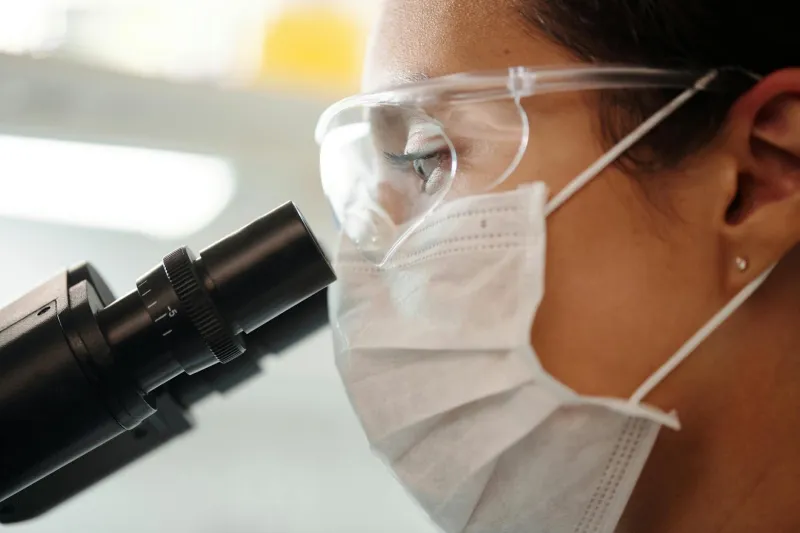
Using the same meticulous techniques she'd developed studying rat brains, Diamond examined Einstein's neural tissue under her microscope. What she discovered was remarkable: Einstein's brain showed the same patterns of enrichment she'd found in her laboratory rats. Areas responsible for mathematical thinking had more glial cells—the support cells that nourish neurons—than typical brains.
The finding provided powerful evidence for what Diamond had been arguing for decades: brains physically adapt to how we use them. Einstein's intensive mathematical thinking had literally reshaped his neural architecture.
The Quiet Revolution That Changed Everything
For thirty years, Diamond continued her work while the scientific establishment slowly caught up. She published over 60 research papers, trained hundreds of graduate students, and methodically built the evidence that would eventually revolutionize neuroscience. Her laboratory at UC Berkeley became a pilgrimage site for researchers who wanted to understand how the brain actually worked.
The breakthrough came in the 1990s when new brain imaging technology allowed scientists to observe living human brains changing in real-time. Suddenly, Diamond's "impossible" findings were being confirmed in study after study. The concept now called neuroplasticity—the brain's ability to reorganize and adapt throughout life—became the foundation of modern neuroscience.
From Janitor's Daughter to Scientific Pioneer
Diamond's work fundamentally changed how we think about human potential. Her research underpins modern treatments for stroke, depression, and learning disabilities. It explains why London taxi drivers have enlarged hippocampi from memorizing the city's streets, and why musicians' motor cortexes expand from years of practice.
More importantly, her findings demolished the fatalistic view that intelligence and mental ability are fixed from birth. Instead, Diamond proved that our brains are remarkably adaptable, constantly reshaping themselves based on our experiences and choices.
In her later years, Diamond became a beloved teacher whose undergraduate anatomy classes at UC Berkeley drew standing-room-only crowds. She would arrive carrying a hatbox containing a human brain, treating each lesson as an opportunity to share the wonder she'd felt as that curious child peering through laboratory windows.
The Legacy of Looking Closer
When Marian Diamond died in 2017 at age 90, obituaries called her the "mother of neuroplasticity." But perhaps her greatest achievement was proving that extraordinary discoveries can come from the most ordinary beginnings. The janitor's daughter who wasn't supposed to ask big questions ended up answering one of the biggest questions in neuroscience.
Today, every time a stroke patient relearns to speak, every time an elderly person takes up a new hobby to stay mentally sharp, every time we encourage children that their brains can grow stronger with effort—we're building on the foundation that Marian Diamond spent a lifetime constructing, one careful experiment at a time.
Her story reminds us that the most revolutionary ideas often come from people willing to look more closely at what everyone else takes for granted. Sometimes the janitor's daughter sees what the professors miss.