She Spent Forty Years in the Basement. What She Found There Rewrote a Chapter of American History.
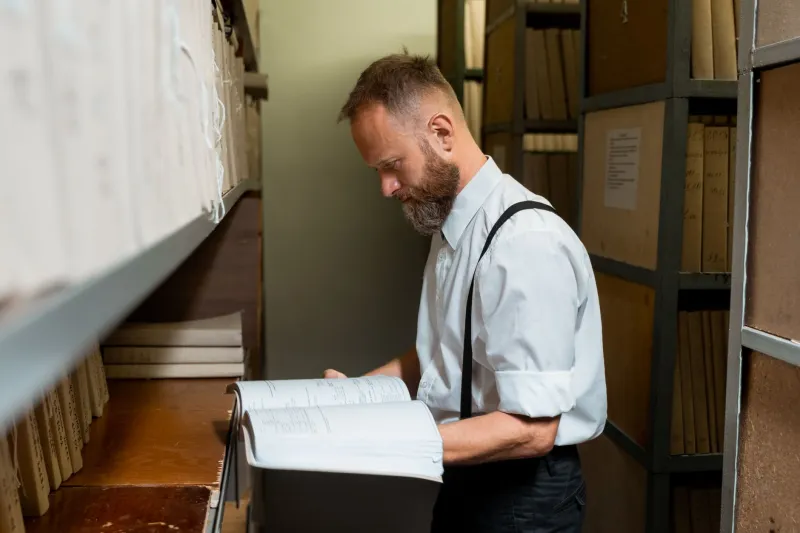
The Box Nobody Had Opened
It arrived at the Rosenberg Library in Galveston, Texas sometime in the 1950s — a cardboard box, slightly water-damaged, filled with papers, letters, and sheet music that had belonged to the estate of a local musician nobody much remembered. The box was catalogued, assigned a reference number, and placed on a shelf in the climate-controlled storage room two floors below street level.
For nearly thirty years, it sat there undisturbed.
Jane Ennis was hired as an archivist at the Rosenberg in 1974. She had a library science degree from the University of Texas and a reputation among colleagues for a particular kind of professional stubbornness — the sort that made her incapable of leaving a catalogue entry incomplete or a provenance question unanswered. She wasn't famous. She wasn't publishing academic papers. She was, by every external measure, exactly what she appeared to be: a meticulous, dedicated small-town archivist doing quiet work in a building most people walked past without noticing.
She found the box during a routine inventory audit in 1976. The name on the estate label meant nothing to her. But the sheet music inside stopped her cold.
A Name That Rang No Bells
The papers belonged to a man named Gus Cannon — not the Memphis jug band musician of the same name who has at least a modest entry in the blues history books, but a different man entirely: a Black composer and bandleader who had worked the Gulf Coast circuit in the years between 1895 and 1920, writing and performing a style of music that blended ragtime, blues, and the conjunto influences drifting up from the Texas-Mexico border.
Ennis had never heard of him. Neither, it turned out, had virtually anyone else.
She spent her lunch breaks that first week just reading the letters. They were addressed to venues in Houston, New Orleans, and San Antonio. They referenced performances, payment disputes, and collaborations with musicians whose names she did recognize — names that appeared in the standard histories of early American popular music, histories that somehow contained no mention of the man whose correspondence she was holding.
That absence was the thing that hooked her.
Forty Years on a Single Thread
What followed was not a dramatic breakthrough. It was something rarer and in some ways more impressive: four decades of patient, methodical detective work conducted almost entirely outside the attention of the academic world.
Ennis began cross-referencing. She pulled newspaper archives from Houston and Galveston dating back to the 1890s, reading through microfilm reels page by page, looking for any mention of performances, venues, or musicians that might connect to the papers in the box. She wrote letters — actual handwritten letters, later emails — to music historians, university libraries, and archives in New Orleans and Memphis, asking whether anyone had records that might fill in the gaps.
Most of them didn't write back. The ones who did were politely skeptical.
She kept going anyway.
Over the years, she assembled a picture of a man who had been, by any reasonable measure, a significant figure in the development of early American popular music along the Gulf Coast. Cannon had led a multi-racial band at a time when that was genuinely dangerous. He had composed songs that showed up — uncredited, uncompensated — in the repertoires of more famous musicians who came after him. He had run a music school out of a Galveston storefront that trained at least a dozen musicians who went on to regional prominence.
And then, after the 1900 Galveston hurricane — the deadliest natural disaster in American history — he had simply disappeared from the record. His community was shattered. His papers ended up in a box. His name stopped appearing in the histories.
When the Academy Finally Listened
The turning point came in 2009, when Ennis presented a paper at a regional Texas history conference — not a musicology conference, not an academic symposium on African American history, just a small gathering of local historians in a hotel ballroom in Austin. She was nervous. She had spent thirty-three years on this research and had never formally presented any of it.
A graduate student in the audience recorded her presentation on his phone and posted it online. Within two weeks, it had been seen by a musicologist at the University of Michigan who had been researching early Gulf Coast music for years and had repeatedly hit the same wall Ennis had spent decades methodically dismantling.
The collaboration that followed resulted in a 2013 academic paper, a 2016 book, and eventually a documentary that aired on PBS in 2019. The Smithsonian acquired copies of the original sheet music from the Rosenberg Library's collection. A historical marker now stands near the site of Cannon's former music school in Galveston.
Ennis retired in 2017. She was seventy-one years old. At her retirement party, a colleague asked her what had kept her going through all the years when nobody was paying attention.
She said she hadn't thought of it as perseverance. She had just found something incomplete and couldn't leave it that way.
The Margins Are Full of History
The story of Jane Ennis and the papers in the basement is, in one sense, a story about a single archivist and a single forgotten musician. But it points toward something larger.
American history — particularly the history of Black artistic and cultural life — is riddled with gaps that exist not because the evidence was destroyed, but because nobody with institutional resources thought to go looking. The people who fill those gaps are rarely the ones with the biggest grants or the most prestigious appointments. They are often the ones who found a box on a shelf and couldn't stop thinking about it.
Great discoveries sometimes come from the margins. They come from basements, from lunch breaks, from the kind of stubbornness that looks, from the outside, exactly like ordinary dedication — until, decades later, it doesn't look ordinary at all.