The Ideas That Outlasted the Erasure
When we think about American innovation, certain names dominate the conversation: Edison, Bell, the Wright brothers. But for every celebrated inventor whose name appears in textbooks, there are dozens of brilliant minds whose contributions were stolen, minimized, or simply forgotten because they belonged to people society preferred to keep quiet.
Here are five inventions that shaped modern America—all created by people who were supposed to stay in the background, but whose ideas were too powerful to suppress.
1. The Traffic Light System That Saved Millions of Lives
Inventor: Garrett Morgan (1877-1963)
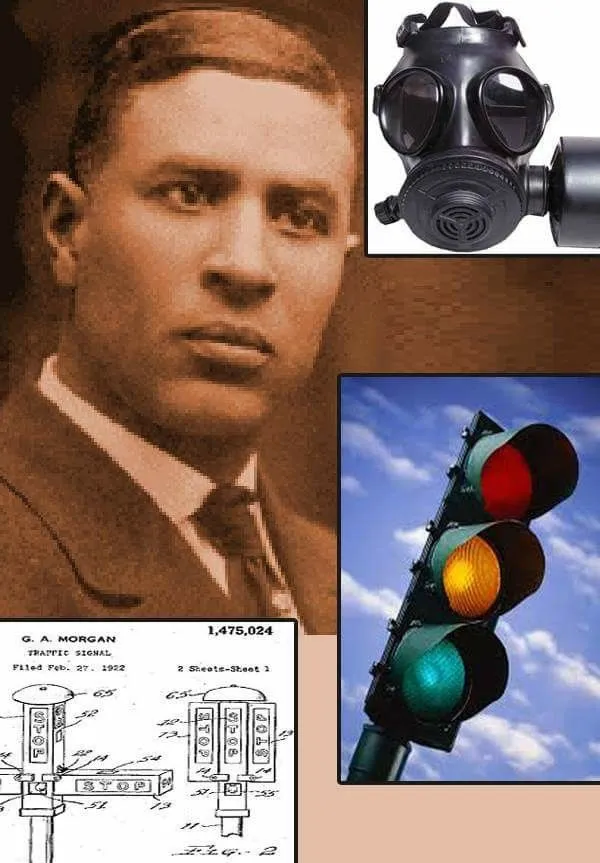 Photo: Garrett Morgan, via i.pinimg.com
Garrett Morgan was the son of formerly enslaved parents in Kentucky, and by the 1910s, he was running a successful tailoring business in Cleveland. But Morgan was also an inventor, and he was troubled by the chaos he witnessed at busy intersections. Cars were becoming common, but traffic management was primitive—essentially just police officers waving their arms and hoping for the best.
Morgan's solution was elegant: a T-shaped signal with three positions—stop, go, and an all-clear warning that gave pedestrians and vehicles time to clear the intersection safely. He patented the design in 1923 and sold it to General Electric for $40,000 (worth about $600,000 today).
But here's what makes Morgan's story remarkable: he didn't just invent the traffic light system we still use today. He also invented an early version of the gas mask after witnessing a tunnel explosion in Cleveland. When white officials were too afraid to enter the smoke-filled tunnel to rescue trapped workers, Morgan put on his safety hood and went in himself, saving multiple lives.
Despite these contributions, Morgan's name rarely appears in discussions of American innovation. His traffic light patent was bought by a major corporation and his individual contribution was absorbed into the broader story of automotive safety—a pattern that repeated itself for many inventors from marginalized backgrounds.
2. The Algorithm That Launched the Computer Age
Inventor: Ada Lovelace (1815-1852)
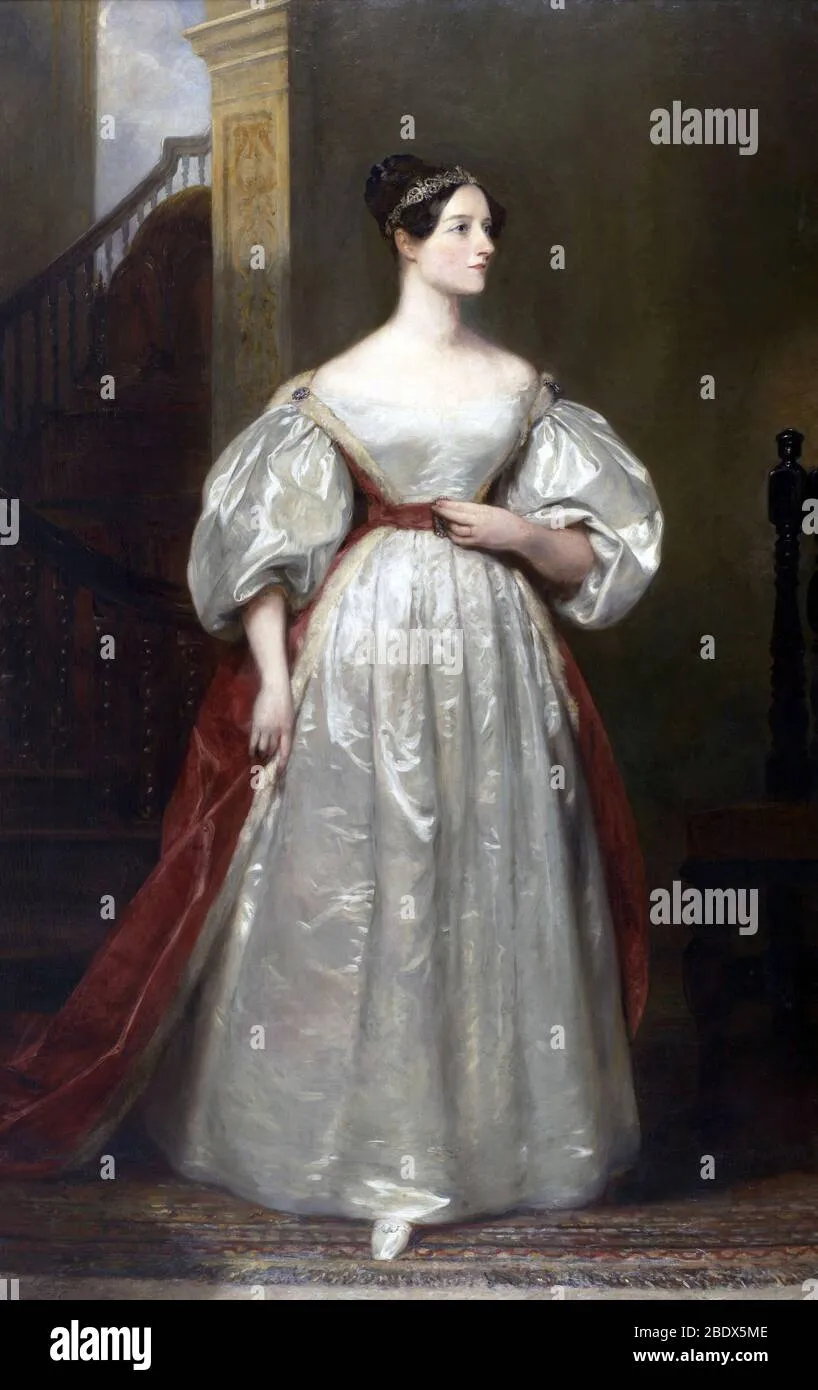 Photo: Ada Lovelace, via c8.alamy.com
Born Ada Byron in London, she was the daughter of the poet Lord Byron, but her mathematical genius far exceeded her famous father's literary achievements. In 1840s England, women weren't supposed to pursue mathematics, but Lovelace was fascinated by Charles Babbage's Analytical Engine—an early mechanical computer.
While Babbage built the machine, Lovelace wrote what is now recognized as the world's first computer algorithm. Her notes on the Analytical Engine included a method for calculating Bernoulli numbers—essentially the first computer program ever written.
More importantly, Lovelace understood something that even Babbage missed: these machines could do more than just calculate. She wrote that the Analytical Engine "might act upon other things besides number" and could potentially compose music, create art, or solve complex logical problems.
For over a century, Lovelace's contributions were dismissed as the hobby of a nobleman's daughter. It wasn't until the 1950s, when computer scientists began developing modern programming languages, that they realized Lovelace had anticipated the entire concept of general-purpose computing a hundred years earlier.
3. The Home Security System That Started a Revolution
Inventor: Marie Van Brittan Brown (1922-1999)
 Photo: Marie Van Brittan Brown, via newsworthywomen.com
In 1960s Queens, New York, Marie Van Brittan Brown was working as a nurse while her husband worked irregular hours as an electronics technician. Their neighborhood was changing, crime was increasing, and police response times were frustratingly slow.
Brown's solution was revolutionary: a closed-circuit television system that allowed homeowners to see who was at their door, communicate with visitors through an intercom, and remotely unlock doors for trusted guests. Her 1969 patent described a system with multiple cameras, wireless communication, and remote monitoring—essentially the blueprint for every home security system used today.
The patent was groundbreaking, but Brown's name disappeared from the story almost immediately. Major corporations developed home security systems based on her design, but she received little credit or compensation. It wasn't until the 1990s, when home security became a billion-dollar industry, that researchers began tracing the technology back to Brown's original patent.
Today, when we talk about smart homes and IoT devices, we're describing systems that Brown envisioned fifty years ago. Her invention didn't just change home security—it laid the foundation for an entire industry.
4. The Elevator Safety System That Built Skylines
Inventor: Alexander Miles (1838-1918)
Alexander Miles was born to formerly enslaved parents in Ohio and later moved to Minnesota, where he became a successful businessman. But Miles was also an inventor, and he was concerned about elevator safety in the growing number of tall buildings appearing in American cities.
Early elevators were dangerous—the shaft doors had to be manually opened and closed, and people frequently fell down elevator shafts. Miles invented an automatic system that opened and closed elevator doors as the car reached each floor, making elevators dramatically safer.
His 1887 patent was quickly adopted by elevator manufacturers across the country. Without Miles' safety system, the construction of skyscrapers would have been impossible—no one would have been willing to use elevators that regularly killed their passengers.
Yet Miles' contribution to American architecture and urban development is rarely acknowledged. The elevator companies that used his design became household names, but Miles himself faded into obscurity. His invention literally made modern cities possible, but his story was forgotten.
5. The Folding Cabinet Bed That Transformed Small Spaces
Inventor: Sarah Goode (1855-1905)
Sarah Goode was born into slavery in Ohio, but after emancipation, she moved to Chicago and opened a furniture store. Her customers were often working-class families living in small apartments, and Goode noticed they struggled to fit both beds and furniture into tiny spaces.
Her solution was ingenious: a cabinet that looked like an ordinary desk during the day but could be folded down into a bed at night. Her 1885 patent for the "Folding Cabinet Bed" was one of the first patents granted to an African American woman.
Goode's design became enormously popular in urban areas where space was limited. Furniture manufacturers across the country began producing variations of her folding bed, and the concept evolved into the Murphy beds and convertible furniture we use today.
But like so many inventors from marginalized backgrounds, Goode's name was quickly erased from the story. The furniture companies that mass-produced her design became successful, but Goode herself received little recognition or financial benefit from her innovation.
The Pattern of Erasure and Survival
These five stories share a common thread: brilliant people whose social status was supposed to limit their influence created ideas too powerful to suppress. Their inventions survived and thrived even when their names were forgotten.
What's remarkable isn't just that these inventors overcame the barriers placed in front of them—it's that their ideas were so fundamentally sound that they became the foundation for entire industries. Traffic lights, computer programming, home security, elevator safety, space-saving furniture—all of these concepts emerged from people who were supposedly on the margins of American society.
Their stories remind us that innovation has never been the exclusive domain of the privileged and well-connected. Some of the most transformative ideas in American history came from people who had no choice but to think differently, to solve problems that the establishment didn't even recognize as problems.
Today, when we celebrate American innovation, we should remember that the most important breakthroughs often come from the people society expects the least from. The names may have been erased, but the ideas endured—and that might be the most powerful triumph of all.