She Couldn't Read a Single Note — So She Listened Harder Than Anyone Else
The Woman Nobody Expected to Save Anything
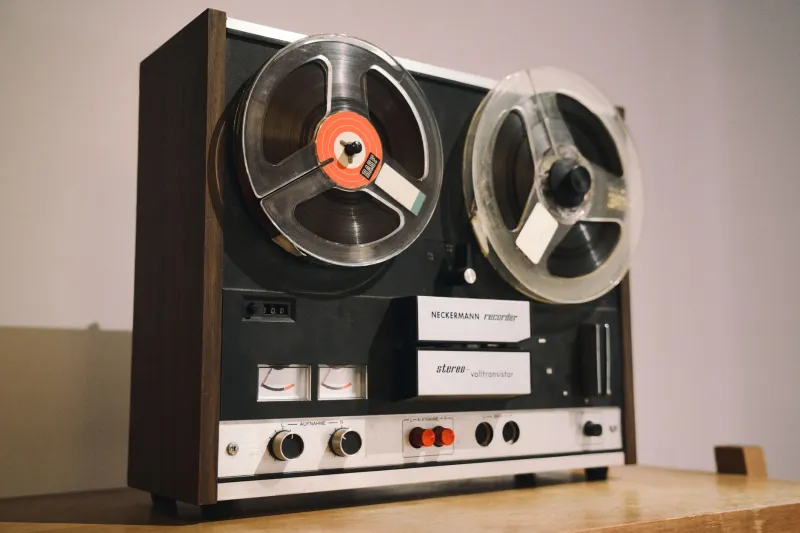
Somewhere in a temperature-controlled vault in the American South, there are reel-to-reel tapes that almost didn't survive. Field recordings made on crackling equipment in church basements, on front porches, in juke joints barely clinging to the edge of dirt roads. Voices of men and women who never made a record deal, never played a concert hall, never got a Wikipedia page. Those recordings exist today — properly catalogued, cross-referenced, and accessible to researchers and musicians around the world — largely because of a woman who couldn't read music notation and had never formally studied a single hour of musicology.
Her name was Eleanor Ruth Cass. And in the early 1960s, when trained academics were busy arguing over which regional folk traditions were "pure" enough to deserve preservation, Eleanor was quietly doing something more important: she was actually saving them.
A Misfit in the Stacks
Eleanor came to archival work the long way around. Born in rural Tennessee in 1931, she struggled through school at a time when dyslexia wasn't a diagnosis — it was a character flaw. Teachers called her slow. Classmates called her worse. She learned early that written language would never be her native tongue, so she developed other fluencies instead: memory, pattern recognition, and an almost preternatural ability to absorb and retain what she heard.
She eventually landed a job at a regional library in Nashville, hired more for her tireless work ethic than any particular credential. She reshelved books. She mended bindings. She answered phones. Nobody expected much more than that.
But in 1961, the library received a donation that would change everything — a disorganized collection of acetate discs and open-reel recordings gathered by a traveling folklorist who had died without completing his cataloguing work. The head librarian wanted them organized and shelved. He assigned Eleanor, figuring it was a straightforward sorting job.
It was not a straightforward sorting job.
Listening as a Method
Eleanor couldn't use the written labels — many were smudged, incomplete, or simply wrong. So she did what she always did: she listened. She played every single recording. All of it. Hours and hours of field recordings, some of them barely audible, some of them extraordinary. She took notes in her own shorthand system, a personal code she'd developed over years of working around her dyslexia.
What she created wasn't the standard catalogue anyone expected. Instead of organizing by region or instrument or the collector's arbitrary numbering system, she organized by what she heard — by call-and-response patterns, by the modal scales underlying the melodies, by the rhythmic signatures that recurred across recordings made hundreds of miles apart. She drew maps. Literal hand-drawn maps connecting musical phrases across geography and time.
The trained musicologists who eventually reviewed her work were, at first, dismissive. One wrote in a professional journal that her organizational system was "idiosyncratic at best." But then something happened: musicians started using the archive. Blues guitarists. Bluegrass fiddle players. Early rock and rollers trying to understand where their instincts came from. And they kept coming back to the same observation — Eleanor's cross-references led them places no other catalogue had ever pointed.
The Connections Nobody Else Made
The revelation that eventually got Eleanor taken seriously in academic circles was almost accidental. A graduate student using her archive in 1967 noticed that Eleanor had cross-referenced a Sacred Harp hymn from Alabama with a work song from the Mississippi Delta and a Scots-Irish ballad fragment from Appalachia — three recordings that shared what Eleanor had labeled, in her own shorthand, as "the same underneath feeling."
The student brought it to his advisor. The advisor brought it to a colleague. Within eighteen months, there was a peer-reviewed paper exploring the modal convergences Eleanor had identified by ear alone, tracing the shared melodic DNA across traditions that academic musicology had always treated as entirely separate streams. It was a significant finding. Eleanor's name appeared in the acknowledgments.
She didn't complain about the credit. She was already busy expanding the archive.
Throughout the late 1960s and into the 1970s, Eleanor secured funding — awkwardly, in meetings where she sometimes stumbled over prepared remarks she couldn't read fluently — and began sending out her own field recorders. She had an instinct for which communities still held living musical traditions that were slipping away. She was right more often than she was wrong.
The Inheritance She Left Behind
By the time Eleanor retired in 1984, the collection she had built and organized had grown to over 14,000 recordings. Musicians from Bob Dylan's inner circle to the architects of the 1990s alt-country revival had spent time in that archive. Ethnomusicologists who had once dismissed her methods were assigning her catalogue system to graduate students as a model of intuitive cross-referencing.
She never published a book. She never held an academic title. When a reporter from a regional newspaper profiled her in 1979, she reportedly laughed at the description of herself as a musicologist. "I'm a librarian," she said. "I just listened better than most."
There's something worth sitting with in that. The formal gatekeepers of American musical history — the people with the degrees and the grant money and the institutional authority — had a system. Their system sorted things into boxes. Eleanor's system asked what things had in common. And because she had never been taught the "right" way to hear music, she heard it without the filters that training installs.
The recordings she saved are still being used. Researchers still find things in her cross-references that surprise them. And somewhere in a temperature-controlled vault, the voices of people who never expected to be remembered are still, improbably, being heard.
That's what forgotten triumphs actually look like, most of the time. Not a headline moment. Just one person, listening harder than anyone thought necessary, refusing to let something precious disappear.