When Ancient Wisdom Met the Scalpel: The Rebel Who Rewrote Medicine by Trusting His Hands
The cadaver lay still on the wooden table, candlelight flickering across its pale skin. In the shadows of a basement in Padua, Italy, a young man named Andreas Vesalius made an incision that would slice through 1,400 years of medical orthodoxy.
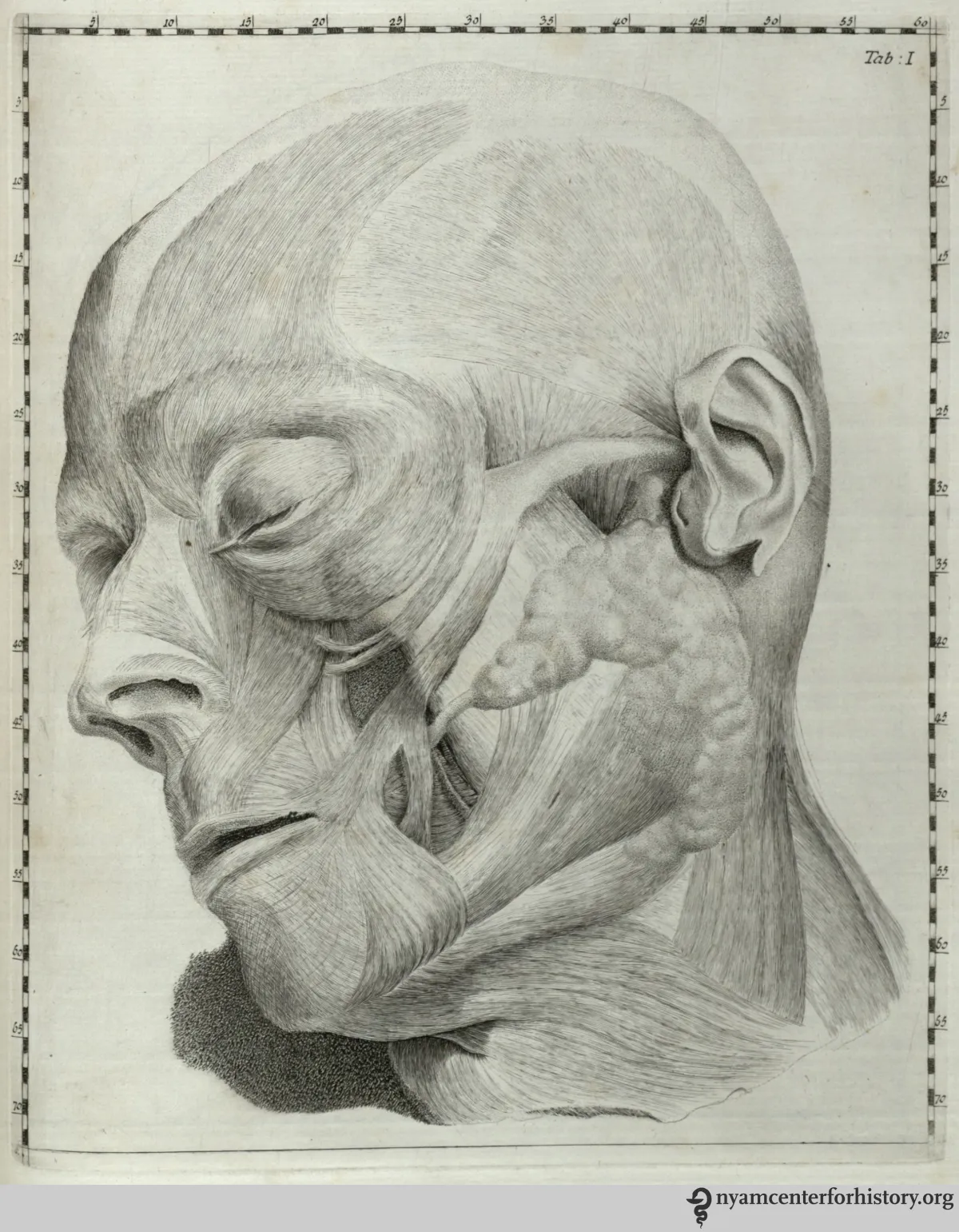 Photo: Andreas Vesalius, via nyamcenterforhistory.org
It was 1540, and medicine was built on faith, not facts. Doctors didn't dissect bodies — they read from ancient Greek texts while barber-surgeons did the dirty work below. The word of Galen, a Roman physician who had died over a millennium earlier, was gospel. To question his anatomical descriptions was to question the church itself.
Vesalius had a problem: what he saw with his own eyes didn't match what the books told him to see.
The Dropout Who Chose Curiosity Over Credentials
Born into a family of court physicians in Brussels, Vesalius seemed destined for a conventional medical career. He enrolled at the University of Paris, Europe's premier medical school, where students spent years memorizing Galen's texts without ever touching a human body.
But war disrupted his studies, forcing him to transfer to the University of Padua. There, something shifted. While his professors droned on about ancient wisdom, Vesalius found himself drawn to the dissection theater — not as a passive observer, but as someone who needed to know what was actually inside.
The problem was, nobody was looking. Professors sat high above the dissection table, reading from Galen while pointing at body parts they'd never examined themselves. When what the barber-surgeon uncovered didn't match the text, the assumption was always that the body was abnormal, not that Galen might be wrong.
Vesalius couldn't accept that logic.
Midnight Dissections and Dangerous Discoveries
What happened next was either brilliant or insane, depending on who you asked. Vesalius began conducting his own dissections — in secret, often at night, using bodies he obtained through methods that were legally questionable at best.
He discovered that Galen had never actually dissected a human being. The Roman physician had based his anatomical descriptions on apes and pigs, then extrapolated to humans. For over a thousand years, European medicine had been built on educated guesses.
The heart didn't have holes in its central wall, as Galen claimed. The liver wasn't divided into five lobes. The jaw wasn't made of two bones. One by one, Vesalius documented discrepancies that undermined the entire foundation of medical knowledge.
His colleagues weren't impressed. They accused him of arrogance, of placing his judgment above centuries of accepted wisdom. Some suggested his findings were the work of the devil.
The Atlas That Changed Everything
In 1543, at just 28 years old, Vesalius published "De Humani Corporis Fabrica" — "On the Fabric of the Human Body." It wasn't just a medical text; it was a revolution printed on paper.
The book contained over 200 detailed illustrations based on his own dissections, showing human anatomy as it actually existed rather than as ancient texts claimed it should. The artwork was so precise and beautiful that it elevated medical illustration to an art form.
More importantly, Vesalius included a radical proposition: doctors should trust their own observations over inherited authority. He wrote that anatomical knowledge should come from "the things themselves" rather than from books about books about books.
The medical establishment was furious. His former professor in Paris publicly burned his writings. Colleagues accused him of undermining the natural order. The Spanish Inquisition investigated him for heresy.
The Price of Being Right Too Early
The backlash was swift and personal. Facing mounting pressure and death threats, Vesalius made a shocking decision: he burned his unpublished manuscripts and abandoned anatomy entirely.
He became court physician to Holy Roman Emperor Charles V, a prestigious but safe position that kept him away from controversial research. For years, he watched from the sidelines as other anatomists slowly, quietly, began confirming his discoveries.
It was a familiar pattern in the history of science — the pioneer pays the price while others reap the rewards of acceptance.
Legacy of a Revolutionary
Vesalius died in 1564, shipwrecked on a pilgrimage that may have been imposed as penance for his scientific "sins." But his ideas had already begun their own journey.
Within a generation, medical schools across Europe were teaching anatomy based on direct observation rather than ancient texts. Doctors began to see the human body as something to be understood through investigation, not reverence.
The ripple effects extended far beyond medicine. Vesalius had demonstrated that careful observation could overturn centuries of accepted wisdom — a principle that would later guide Galileo, Newton, and Darwin.
The Barber-Surgeon's Vindication
Today, Vesalius is remembered as the father of modern anatomy, but his story resonates beyond medical history. He represents something quintessentially American: the belief that truth matters more than tradition, that questioning authority isn't just acceptable but necessary.
In an age when experts demand unquestioning faith and ancient wisdom goes unexamined, Vesalius reminds us that progress comes from people willing to look for themselves — even when everyone else insists they should keep their eyes closed.
His basement dissections in Padua weren't just about mapping the human body. They were about proving that sometimes, the most important discoveries come from trusting what you can see and touch over what you're told to believe.